
Car Alternator: What It Does, How It Works and When to Replace It
What if a flat battery isn’t a battery problem at all? A car alternator fault can cause starting trouble, dim lights or a battery that keeps losing charge. But the battery, starter motor, belt or wiring can cause similar symptoms, so it’s easy to blame the wrong part.
Key Takeaways
- The alternator generates power while the engine runs and recharges the battery.
- Battery, belt, wiring or regulator faults can mimic an alternator fault, so establish the cause first.
- Use accurate vehicle details to find a suitable brand-new aftermarket alternator.
What does a car alternator do in your vehicle?
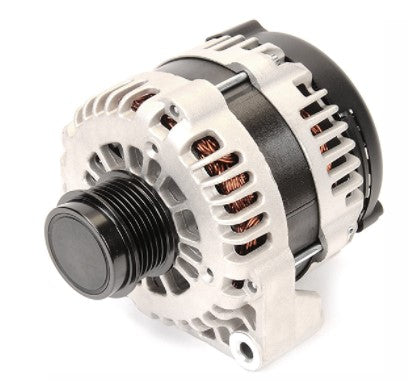
The alternator generates electrical power while the engine runs. It supplies the vehicle’s electrical systems and replenishes the battery, which stores energy and supplies it to start the vehicle.
The engine drives the alternator through a belt, and voltage regulation controls its output to suit the system while charging the battery. Electrical connections carry the current.
In many alternators, rotation drives internal components that generate alternating current, which is converted to direct current for the vehicle. For a more technical explanation of automotive alternator operation, see the overview of how alternators convert mechanical energy into electrical current.
How a car alternator supports the vehicle’s charging system
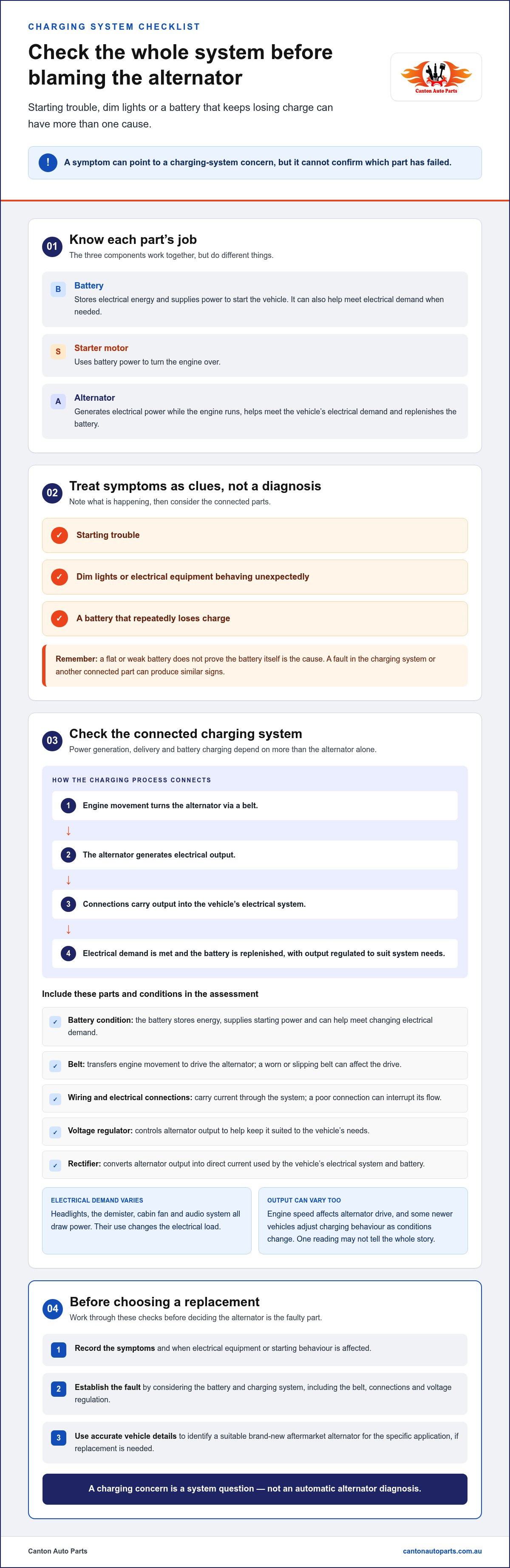
A belt turns the alternator, connections carry its output into the electrical system, and the voltage regulator controls that output as conditions change. A charging concern doesn’t automatically mean the alternator has failed; the belt, wiring and battery all play a part.
Before choosing a replacement, establish whether the fault is in the alternator or elsewhere in the charging system. Then browse brand-new aftermarket alternators using accurate vehicle details.
Alternator vs battery vs starter: which part does what?
The battery stores energy and powers starting, the starter turns the engine, and the alternator generates power once the engine is running.
| Component | Main job | Question it answers |
|---|---|---|
| Alternator | Generates electrical output while the engine runs and helps replenish the battery. | Is electrical power being generated and the battery being recharged during operation? |
| Battery | Stores electrical energy and supplies power for starting and other electrical needs. | Can stored power be supplied when the engine is off or starting? |
| Starter motor | Uses battery power to turn the engine during the starting process. | Is the engine being turned over to begin operation? |
What should you do when you suspect a car alternator fault?
Don’t order a replacement based on a warning light or starting problem alone. A weak battery, slipping belt, poor connection or regulator issue can produce similar symptoms.
- Note the symptoms. Record when the problem appears and what changed before it began.
- Consider connected parts. Check the battery, belt, wiring and regulator.
- Establish the fault. Assess the charging system before replacing anything.
- Confirm the vehicle application. Use make, model, year, engine and existing-part details.
Replacing a car alternator: choose the correct part and next step
Choose a replacement only once the fault is established. Aftermarket doesn’t mean universal: compare the listing’s application with your vehicle’s make, model, year and engine, and with the existing alternator’s details if available.
Canton Auto Parts is an Australian-owned online supplier of brand-new aftermarket alternators and other replacement parts, with Australia-wide dispatch. Once you’ve confirmed the fault, browse brand-new aftermarket alternators at Canton Auto Parts.
Make your next replacement decision with confidence
Canton Auto Parts is 100% Australian owned and operated. Browse the range with your vehicle information ready.
Frequently Asked Questions
What does a car alternator do?
It produces electricity while the engine runs, supplying the vehicle’s electrical equipment and restoring charge to the battery.
Can a car run with a faulty alternator?
Briefly, on battery power, but the charge runs down without replenishment. The vehicle could stall or fail to restart, so arrange an assessment.
How long does a car alternator usually last?
Commonly around 80,000 to 150,000 miles, or roughly seven to ten years. That’s a guide, not a deadline; heat, leaks and heavy electrical loads can shorten its life.
Can I replace a car alternator myself?
Possibly, with suitable experience, tools and vehicle-specific instructions. If you’re unsure about the work or fitment, don’t attempt it yourself.
Tags: