
Aftermarket Starter Motor vs OEM: Which Offers Better Value
Choosing between an aftermarket starter motor and an OEM starter motor is not simply a matter of price. The best option depends on fitment, construction quality, reliability, warranty and the potential cost of another replacement.
An OEM starter follows the vehicle manufacturer's original specification, while aftermarket starter motors are produced by third-party manufacturers. Aftermarket quality can vary significantly between brands and models.
OEM vs Aftermarket Starter Motor: Key Differences
| Factor | OEM Starter | Aftermarket Starter |
|---|---|---|
| Specification | Based on original vehicle specification | Designed as a replacement |
| Fitment | Usually matched to the original application | Must be checked carefully |
| Quality | Generally consistent | Varies by manufacturer |
| Price | Usually higher | Often more affordable |
| Warranty | Depends on supplier | Depends on brand and seller |
| Best for | Original specification | Cost-effective replacement |
The important point is that “aftermarket” does not automatically mean low quality, and OEM does not guarantee that every individual starter will last longer. The quality and condition of the specific unit matter.
What to Check Before Buying a Starter Motor
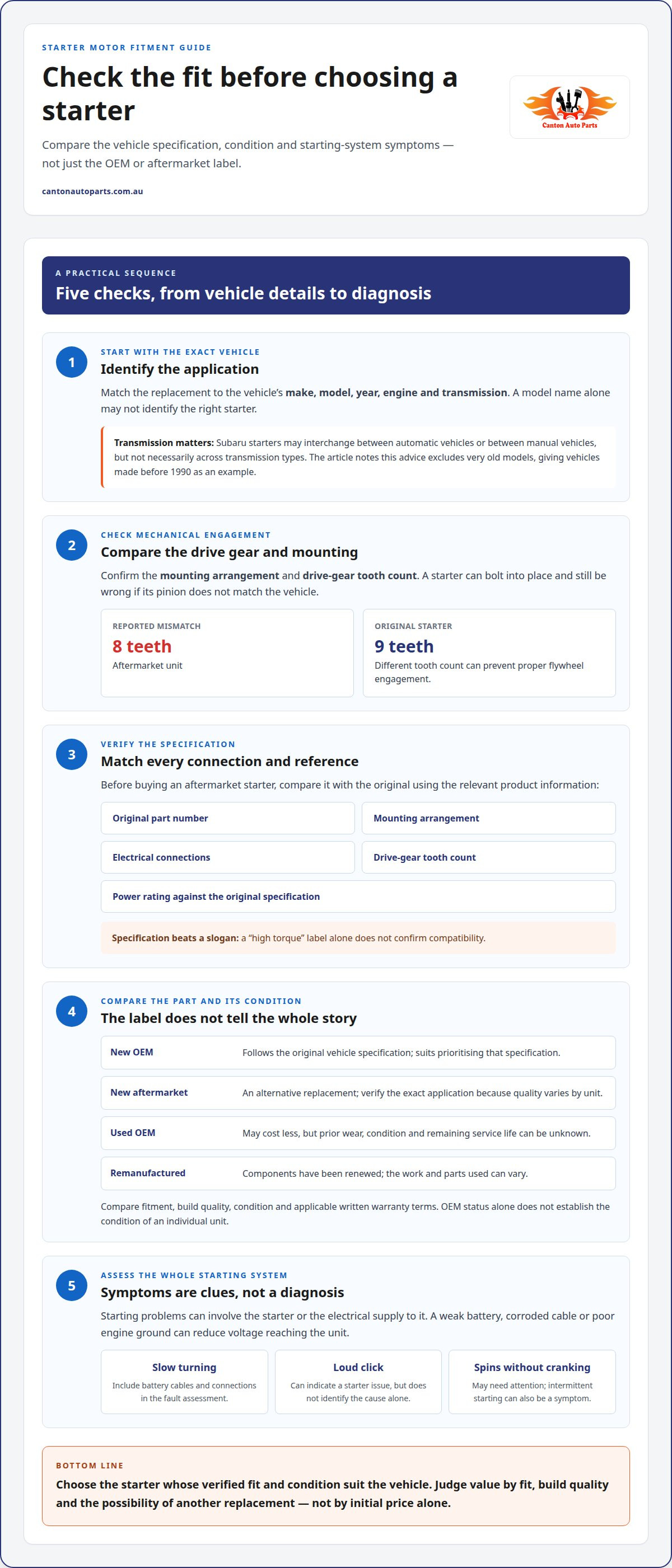
Correct fitment should always be your first priority. Check the following:
- Vehicle make, model and year
- Engine size and engine code
- Manual or automatic transmission
- Original starter part number
- Mounting bolt pattern
- Pinion gear and tooth count
- Electrical connections
- Starter power or output specifications
A starter may physically bolt onto the engine but still be incorrect. For example, a different pinion tooth count can prevent the starter gear from engaging the flywheel correctly.
When possible, compare the replacement against the original starter part number and specifications, rather than relying only on the vehicle model listed in an online advertisement.
Are OEM Starter Motors Better Than Aftermarket?
An OEM starter can be a good choice when maintaining the vehicle's original specification is your priority. However, this does not mean every OEM starter is automatically better than every aftermarket unit.
A new, well-manufactured aftermarket starter can provide reliable service when it is correctly matched to the vehicle. On the other hand, a used or poorly rebuilt OEM starter may have significant wear or an unknown service history.
For this reason, compare the specific starter motor, not simply the OEM or aftermarket label.
Aftermarket Starter Motor Quality
Aftermarket starter motors range from basic replacement units to higher-quality products designed with upgraded components.
When comparing aftermarket starters, consider:
- Manufacturer reputation
- Internal component quality
- Solenoid construction
- Brushes and bearings
- Gear and housing quality
- Electrical specifications
- Warranty coverage
- Application-specific fitment
Terms such as “high torque” or “heavy duty” should not be treated as proof of compatibility or superior reliability. Always check the actual specifications of the starter.
Starter Motor Problems Are Not Always the Starter
Slow or intermittent cranking does not necessarily mean the starter motor has failed.
A weak battery, corroded battery terminals, damaged cables or a poor engine ground can reduce the voltage reaching the starter.
Common starting symptoms include:
- Clicking when starting
- Slow engine cranking
- Intermittent starting
- Grinding noises
- Starter motor spinning without cranking the engine
- No response when the key is turned
These symptoms can have several possible causes. Check the battery and electrical connections before replacing the starter unnecessarily.
Is an Aftermarket Starter Motor Worth It?
An aftermarket starter can offer significant savings compared with an OEM replacement. However, the cheapest option is not always the best value.
Consider the total replacement cost, including:
Starter price + fitting labour + warranty + potential repeat replacement cost
This is particularly important when the starter is difficult to access. If a low-cost starter fails shortly after installation, you may have to pay for labour again.
A reputable aftermarket starter with correct fitment and suitable warranty coverage can therefore offer better value than a very cheap, unbranded unit.
OEM or Aftermarket Starter: Which Should You Choose?
Choose an OEM starter motor if:
- You want the original vehicle specification
- OEM availability is good
- The price difference is reasonable
- Maintaining the original specification is important to you
Choose a reputable aftermarket starter motor if:
- It is confirmed for your exact vehicle
- The manufacturer has a good reputation
- The specifications match the original application
- The warranty provides suitable protection
- The total cost is significantly lower than OEM
Avoid choosing solely on price. A starter motor is a critical component, and incorrect fitment can result in starting problems or additional repair costs.
Starter Motor Replacement in Australia
Before ordering a starter motor, have your VIN, vehicle details and original starter information available. This can help confirm the correct application, particularly when multiple starter versions were fitted to the same model.
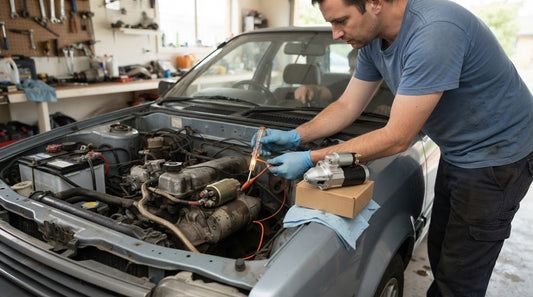
At Canton Auto Parts, we supply brand-new aftermarket starter motors for a range of vehicle applications. We recommend confirming the vehicle's make, model, engine, transmission and other relevant details before ordering.
Frequently Asked Questions
Are aftermarket starter motors reliable?
Yes. A quality aftermarket starter motor can provide reliable service when it is correctly designed and matched to the vehicle. Quality varies between manufacturers, so check the product specifications and warranty.
Is an OEM starter better than an aftermarket starter?
Not necessarily. OEM follows the original vehicle specification, but a reputable aftermarket starter can offer comparable performance at a lower price. The specific manufacturer's quality and correct fitment are more important than the label alone.
How do I know which starter motor fits my vehicle?
Check the VIN, model, engine, transmission, original part number, mounting arrangement, pinion gear and electrical connections. If there are multiple starter options for your vehicle, compare the original starter before ordering.
Why is my starter clicking but the engine won't crank?
A clicking starter can be caused by a weak battery, poor electrical connections, a faulty solenoid or a starter motor problem. Test the battery and connections before replacing the starter.
How much does a starter motor cost in Australia?
There is no single price because starter motor costs vary by vehicle and application. Compare the complete replacement cost, including the starter, fitting labour and warranty, rather than comparing the part price alone.
Final Verdict
There is no universal winner in the aftermarket starter motor vs OEM debate.
OEM is a logical choice when you prioritise the original specification. A reputable aftermarket starter can be the better-value option when it offers verified fitment, suitable construction and reliable warranty coverage.
The best starter motor is the one that correctly matches your vehicle and provides the right balance of fitment, quality, reliability and total replacement cost.
Tags: