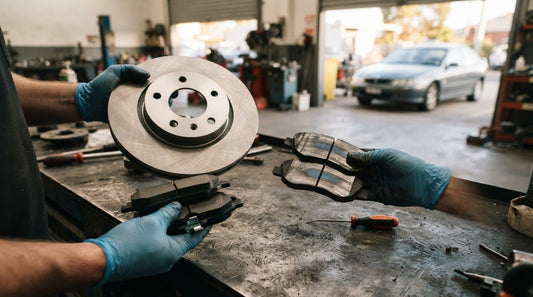

Should You Upgrade Front Brake Rotors for Towing a Heavy Off-Road Camper?
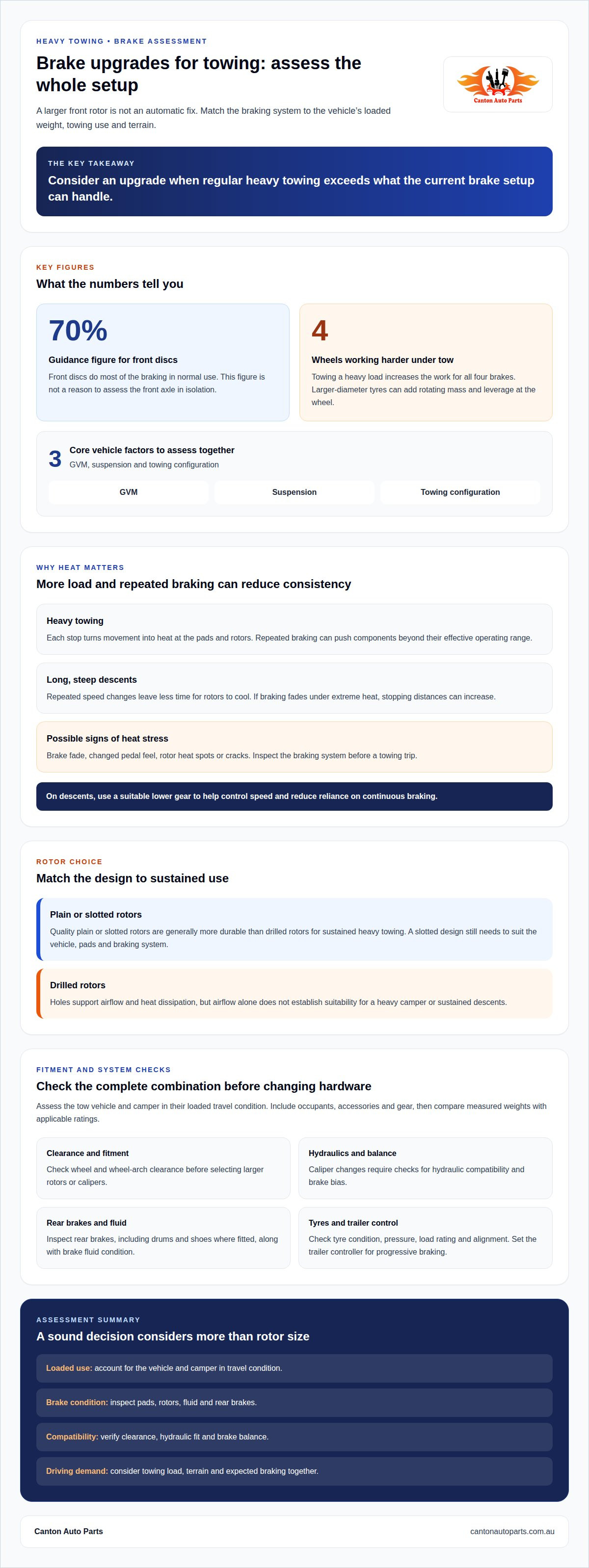
Not always. An upgrade is worth considering if you tow regularly and your current brakes struggle with the load. Rotor size alone doesn’t decide it: the vehicle’s GVM, suspension, tyres and towing setup all matter. This guide explains when an upgrade makes sense, how rotor design affects heat, and what to check before buying.
Quick Answer
Larger rotors with good thermal capacity can help keep braking consistent under heat. But they won’t fix worn pads, old fluid, tired tyres or a poorly set-up trailer brake controller. Check the whole system first, then upgrade if regular heavy towing still exceeds what the brakes can handle.
Why Towing and Off-Roading Demand More From Your Brakes
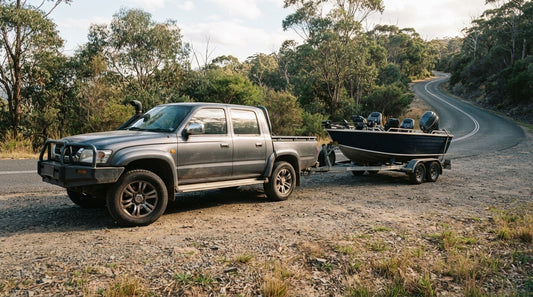
A camper adds mass that all four of your 4WD’s brakes must slow. Larger-diameter tyres add rotating mass and leverage at the wheel. Each stop turns movement into heat at the pads and rotors, and repeated braking can push parts beyond their effective operating range.
As heat builds, you may notice:
- Brake fade and longer stopping distances
- A change in pedal feel
- Heat spots or cracks on rotor surfaces
Long, steep descents leave little time for rotors to cool. Use a lower gear to control speed instead of relying on constant braking.
Is a Brake Upgrade Worth It?
For a 4WD that regularly tows a heavy camper, it’s worth considering. Base the decision on loaded weight, brake condition and how often you tow.
- Weigh the loaded combination. Include passengers, accessories and gear, then compare against your ratings.
- Think beyond the front discs. Front brakes do much of the work in normal use (one guidance figure is 70%), but towing loads all four wheels. If you have rear drums, inspect the drums and shoes too.
- Weigh the cost. A big brake kit can run from several hundred to several thousand dollars. If heavy towing is occasional, it may be hard to justify.
- Check approval rules. Australian requirements depend on the modification and your state or territory. A larger rotor isn’t automatically approved.
- Ask for an itemised quote so you know exactly what’s being changed.
Check These First
Before spending on bigger brakes, sort out the basics that affect stopping:
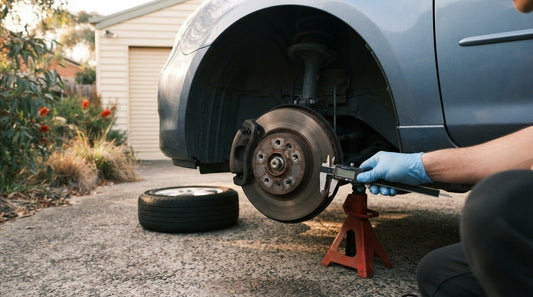
- Pad, rotor and drum condition
- Brake fluid age (fluid absorbs moisture, which hurts performance when hot)
- Tyre condition, pressure, load rating and alignment
- Trailer brake controller gain, set for progressive braking so the trailer wheels don’t lock on loose surfaces
Fixing one of these may help more than a bigger kit.
Choosing Rotors: Plain, Slotted or Drilled?
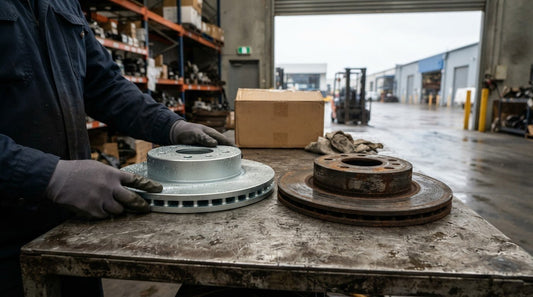
Drilled rotors help airflow, but that alone doesn’t make them suited to a heavy camper. For heavy touring or towing, quality plain or slotted rotors are generally more durable than drilled ones under sustained loads. Slots help with pad contact, but they don’t replace adequate rotor capacity.
Rotor Thermal Capacity: Size, Thickness and Venting
- Size: A larger rotor gives the pad a wider working radius, but doesn’t automatically shorten stopping distance. Tyre grip, load, brake balance and pad condition matter too.
- Thickness: A thicker rotor can absorb more heat, but must suit the caliper and fit inside the wheel.
- Venting: Internal vents move heat away from the disc, depending on rotor design and wheel airflow.
- Pads: Pair the rotor with a towing-oriented compound. DBA Xtreme Performance semi-metallic pads are one option, if they suit your vehicle and rotor.
On loose gravel, tyre grip can limit braking regardless of rotor size.
Big Brake Kit Compatibility and Clearance
A rotor that bolts on can still cause problems once the wheel is fitted. Work through this checklist:
- Match the kit to your exact vehicle variant and factory brake setup.
- Compare rotor diameter, thickness, offset and centre bore with the hub and caliper position.
- Check clearance with your actual wheel, including the rim barrel, spokes and wheel weights. Rotate the wheel a full turn.
- Assess hydraulic compatibility, brake bias and ABS operation as one system. Oversized rotors can change front-to-rear balance.
- Confirm road-use approval for your jurisdiction, and check your vehicle’s warranty terms on modified brakes.
Don’t rely on a listing that matches only the model name.
What’s in a Big Brake Kit?
Contents vary, so check the parts list:
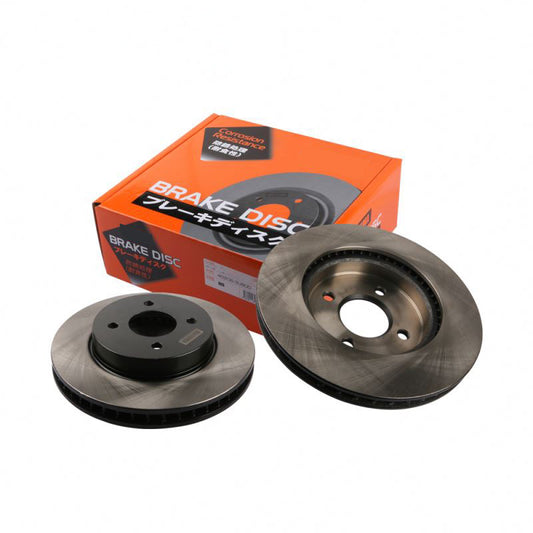
- Rotors: the discs the pads clamp against
- Calipers and brackets: apply clamping force and position the pads
- Pads: make sure they match the calipers and rotors
- Hoses and hardware: included in some kits only
- Brake fluid: often not included, and the fluid must suit your system
Bed in new pads and rotors using the maker’s procedure before towing, and avoid harsh stops while bedding.
Before You Head Off
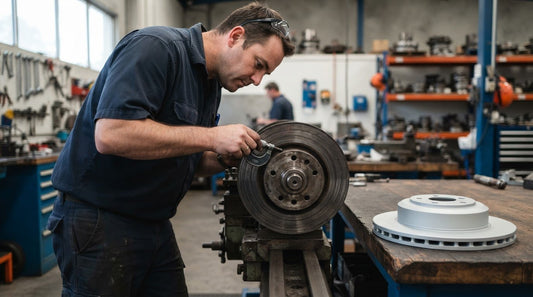
Inspect the pads, rotor faces and fluid before each trip, especially after dust, water crossings and steep descents. Look for cracks, heat spotting or unusual pedal feel before loading the camper. Have a specialist check the system before hilly terrain.
Need Replacement Braking Parts?
Canton Auto Parts supplies new aftermarket brake components, including rotors, plus alternators and control arms. Note your vehicle variant, wheel setup and intended camper load, then contact Canton Auto Parts to confirm compatibility for your braking system.
Frequently Asked Questions
Do upgraded front rotors improve towing performance?
Suitable rotors and pads may help braking stay consistent under heat. They don’t guarantee shorter stops, since tyres, road conditions, weight and trailer braking also matter.
Are larger or slotted rotors compatible with factory calipers and wheels?
It depends on your exact variant. A larger rotor may need a different bracket or caliper. Check wheel clearance, hydraulic compatibility and brake balance.
What upgrades suit common Australian tow vehicles?
No single combination fits every vehicle. Quality plain or slotted rotors with a towing-oriented pad are generally recommended for sustained heavy towing.
How does the factory brake setup affect performance?
Factory brakes were chosen for the original configuration. Fade or a changed pedal feel is a reason to inspect the system, not proof you need larger rotors. Worn pads or old fluid can cause the same symptoms.
Tags: