
Replacing Heavily Scored Brake Discs: Compare Machining and Replacement Costs
When brake discs become heavily scored, worn or uneven, many drivers ask whether machining is cheaper than replacing them. The answer depends on the condition of the disc, its remaining thickness and the vehicle manufacturer’s minimum thickness specification.
Brake disc machining can restore a smooth braking surface when the rotor has enough usable material remaining. However, machining is not suitable for every damaged disc. Cracked, severely warped, deeply scored or excessively thin brake discs should be replaced.
The decision should be based on safety and the complete repair cost, not simply the cheapest upfront option.
When Should Brake Discs Be Machined or Replaced?
A brake disc may be suitable for machining when it has surface grooves, minor scoring or thickness variation, provided it will remain above the manufacturer’s minimum thickness after machining.
Machining removes a small amount of metal from the friction surfaces to create an even braking surface. If removing this material would take the disc below its minimum thickness, replacement is required.
Machining may be suitable when:
- The disc has light to moderate surface scoring.
- Brake shudder is caused by correctable thickness variation or runout.
- Sufficient disc thickness remains.
- The rotor is free from cracks and serious heat damage.
- The finished disc will meet the manufacturer’s specifications.
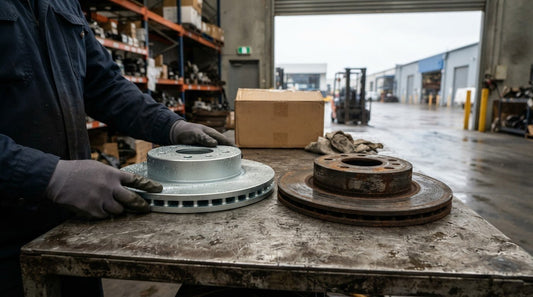
Replacement is generally required when:
- The disc is below or close to its minimum thickness.
- There are cracks or serious heat-related damage.
- Deep scoring cannot be safely removed.
- The disc is severely warped or damaged.
- Machining would remove too much material.
Brake Disc Thickness and Runout Checks
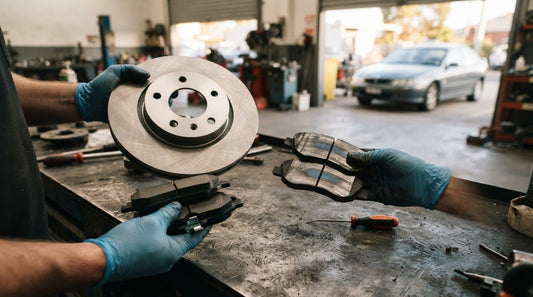
Before machining, a workshop should inspect and measure the rotor. Disc thickness is normally checked at several points around the friction surface using a micrometer to identify uneven wear.
Disc thickness variation (DTV) can contribute to brake pedal pulsation and vibration. Runout measures how much the rotor moves from side to side as it rotates.
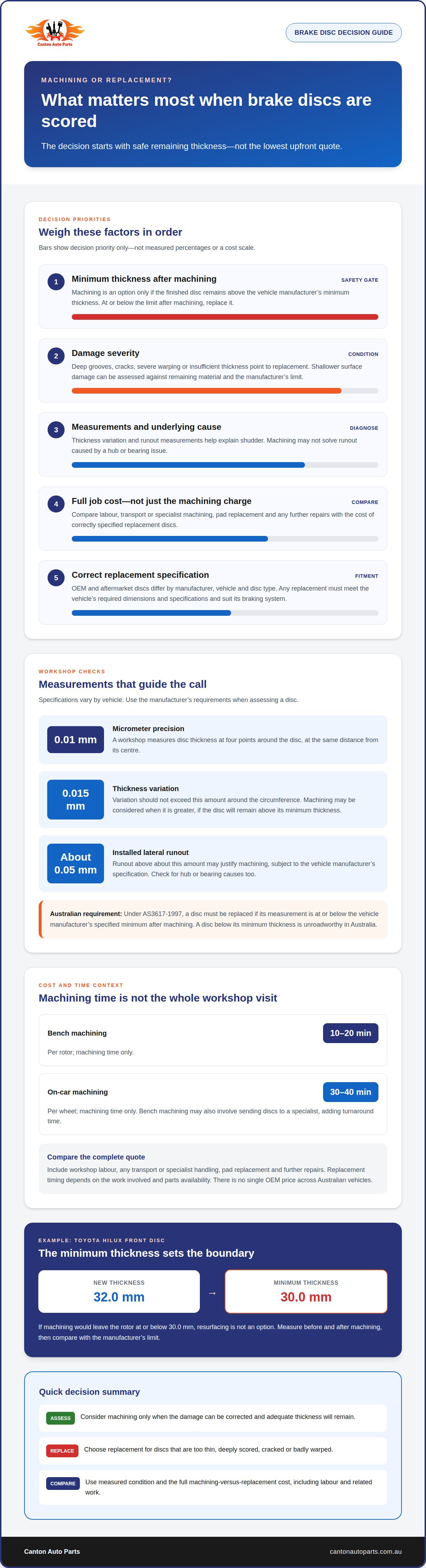
There is no single minimum thickness or runout limit that applies to every vehicle. The correct specification comes from the vehicle manufacturer and may be stamped on the rotor or listed in the service information.
For this reason, a visual inspection alone is not enough to determine whether machining is safe.
Can Deeply Scored Brake Discs Be Machined?
It depends on the depth of the scoring and the remaining thickness of the rotor.
Light surface marks can often be corrected by machining. However, deep grooves may require too much material to be removed, making the disc too thin to safely reuse.
Machining also cannot repair structural damage such as cracks. If the rotor has cracks, severe heat damage or other serious defects, replacement is the safer option.
It is also important to inspect the brake pads. Pads that have worn unevenly or have developed a matching groove may not provide proper contact with a newly machined rotor.
Brake Shudder: Can Machining Fix It?
Brake shudder or pedal pulsation can be associated with disc thickness variation, runout or other brake-system problems.
Machining may correct the problem when the rotor itself is suitable for resurfacing. However, the underlying cause should also be investigated.
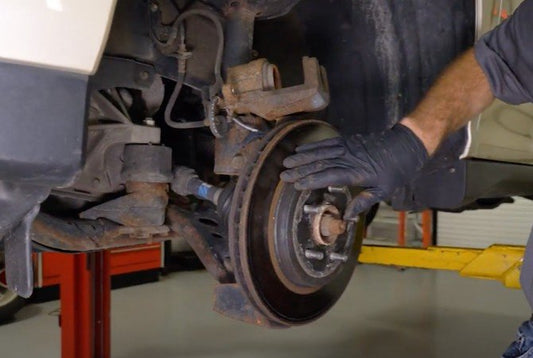
For example, excessive runout can be related to the hub, wheel bearing, incorrect installation or other components, rather than the rotor alone. Simply machining the disc may not permanently solve the problem if the underlying issue remains.
How Much Does Brake Disc Machining Cost Compared With Replacement?
The cheapest option depends on the complete repair cost.
Machining may have a lower initial price than buying new discs, but the total cost can increase when removal, refitting, specialist machining, transport and additional labour are included.
Replacement can sometimes be more cost-effective, particularly when suitable aftermarket brake discs are reasonably priced.
When comparing quotes, check whether the price includes:
- Brake disc removal and refitting
- Machining or replacement of both discs on the axle
- Brake pad replacement
- Workshop labour
- Inspection and measurements
- Any additional repairs required
A $50 machining charge is not necessarily cheaper than replacement if additional labour or removal costs apply.
Machining vs Replacement: Quick Comparison
| Factor | Machining | Replacement |
|---|---|---|
| Initial cost | Usually lower | Usually higher |
| Existing disc reused | Yes | No |
| Suitable for light scoring | Often | Yes |
| Suitable for deep scoring | Sometimes, if thickness allows | Usually preferred |
| Cracked disc | No | Yes |
| Thin disc | No | Yes |
| Corrects surface variation | Potentially | Yes, with new rotor |
| Long-term value | Depends on disc condition | Often better for heavily worn discs |
Should You Machine or Replace Your Brake Discs?
There is no universal answer. Machining is worthwhile only when the existing rotor is structurally sound and has enough thickness to safely meet the manufacturer’s specification after machining.
For heavily scored, cracked, severely warped or excessively worn discs, replacement is generally the better choice.
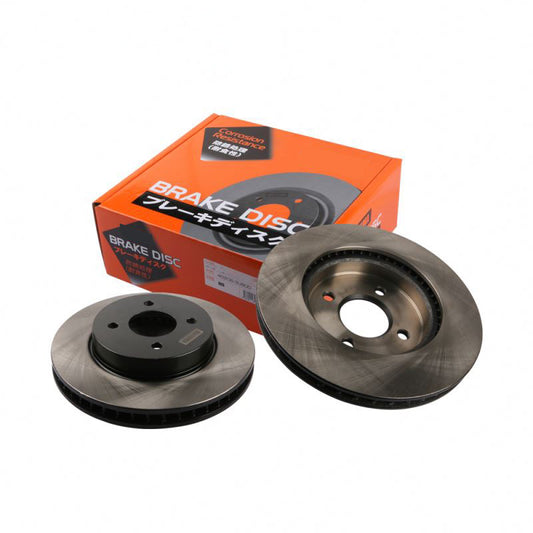
If replacement is required, choosing the correct brake disc and pad combination for your vehicle is essential. Different models, engines, production years and brake configurations can use different rotor sizes and specifications.
Canton Auto Parts supplies aftermarket braking components for a wide range of Australian vehicles.
Frequently Asked Questions
Is it cheaper to machine or replace brake discs?
Machining usually has a lower upfront cost, but replacement can be better value when labour, removal and additional work are included. Compare the complete repair cost rather than the machining price alone.
How much material is removed when machining a brake disc?
The amount varies according to the rotor and the machining required. The workshop should remove only enough material to restore the braking surface while keeping the finished disc above the manufacturer’s minimum thickness.
Can warped brake discs be machined?
Some cases of excessive runout or surface variation may be corrected by machining. However, severe deformation or a rotor that cannot remain within specification after machining should be replaced.
How do I know if my brake discs need replacing?
Have the discs inspected for thickness, scoring, cracks, heat damage and runout. If machining would leave the rotor below the manufacturer’s minimum thickness, replacement is required.
Should brake pads be replaced when discs are machined?
It depends on the condition of the existing pads. If they are worn, unevenly grooved or contaminated, replacing them with the discs can provide better contact and braking performance.
Tags: