
How to choose the right alternator for your vehicle’s electrical load
Choosing the right alternator is essential for maintaining a reliable vehicle charging system. Whether you're replacing a faulty alternator or upgrading your electrical system with additional accessories, selecting the correct amperage is important.
A standard vehicle alternator commonly produces between 120A and 200A. However, vehicles fitted with additional lighting, audio equipment or other electrical accessories may require a higher-output alternator.
In this guide, we'll explain how to choose the right alternator based on electrical load, amperage requirements, battery charging, voltage stability and vehicle compatibility.
Key Takeaways
- Choose an alternator based on your vehicle's actual electrical demand, not simply the highest available amperage.
- Higher-output alternators provide additional capacity for vehicles with electrical upgrades.
- Insufficient alternator capacity can contribute to voltage drops and charging problems.
- Correct wiring, connections and belt compatibility are essential for reliable operation.
- Always check vehicle specifications before purchasing a replacement alternator.
1. Understand Your Vehicle's Electrical Requirements
The first step when choosing an alternator is understanding how much electricity your vehicle uses.
Standard electrical components such as headlights, air conditioning fans, engine management systems and other accessories all draw power from the charging system.
Additional equipment, including aftermarket driving lights, amplifiers and other electrical accessories, increases the total electrical demand.
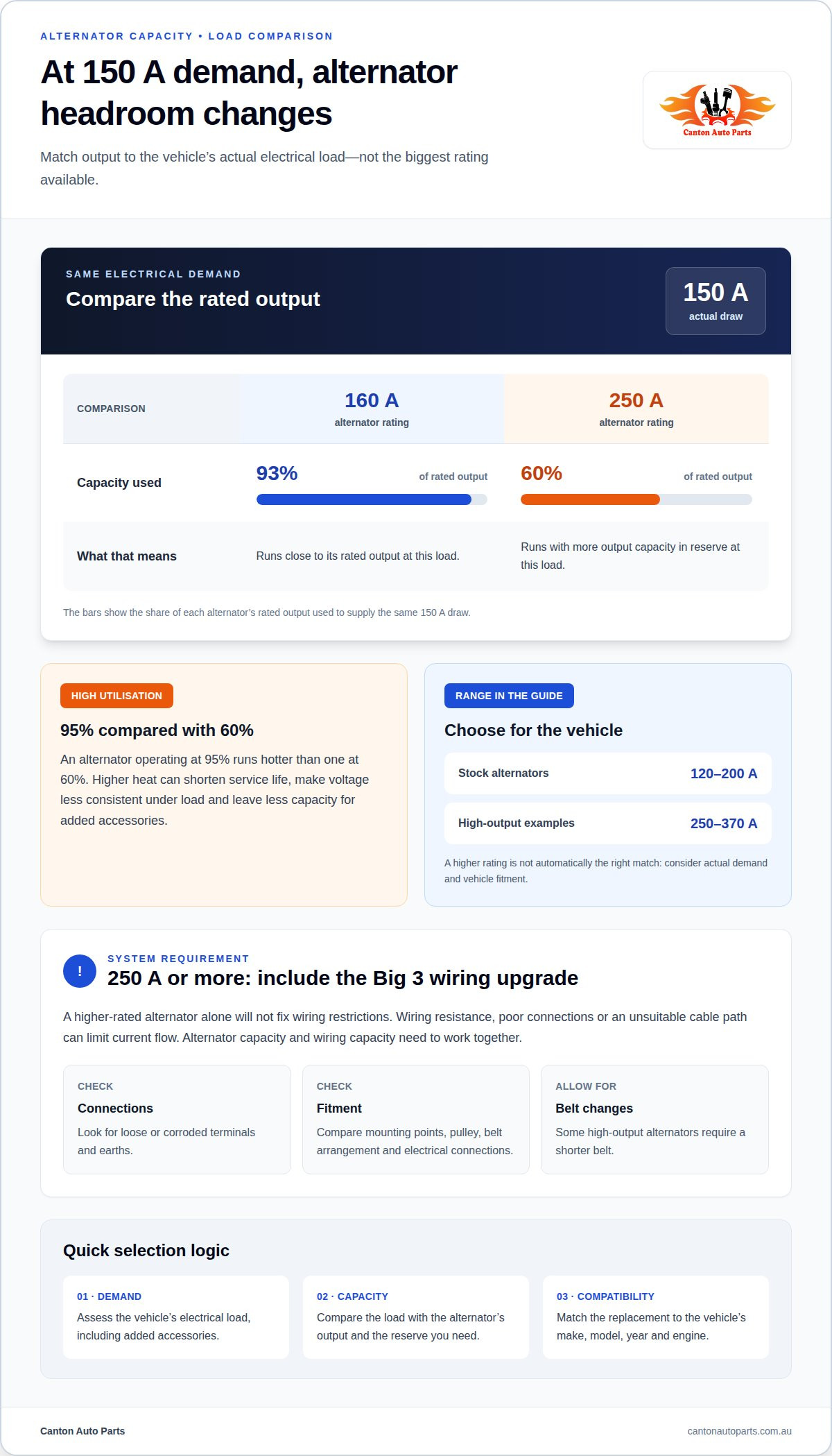
For example, if your vehicle requires approximately 150A of electrical output:
- A 160A alternator operates at approximately 93% of its rated capacity.
- A 250A alternator operates at approximately 60% of its rated capacity.
The higher-output alternator provides more reserve capacity for additional electrical equipment.
However, a larger alternator is not automatically better. The correct choice depends on your vehicle's electrical requirements and intended use.
2. Alternator Amperage and Operating Temperature
An alternator operating close to its maximum rated output generally generates more heat than one operating with sufficient capacity in reserve.
Excessive operating temperatures can contribute to component wear and affect long-term reliability.
High-output alternators, including 250A to 370A models, are designed for vehicles requiring greater electrical capacity. However, some applications may require modifications such as a different drive belt or upgraded wiring.
Always check the alternator's mounting points, pulley arrangement and electrical connections before upgrading.
3. How to Prevent Voltage Drops and Headlight Dimming
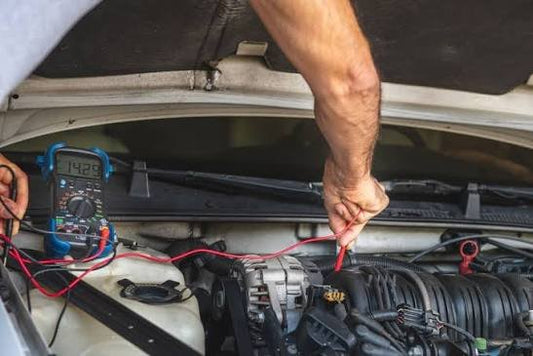
Dimming headlights, flickering lights and inconsistent electrical performance can indicate problems with the vehicle's charging system.
These symptoms may occur when electrical demand exceeds available output or when wiring and connections restrict current flow.
For high-output alternators rated at 250A or above, a Big 3 wiring upgrade is required according to the recommendations in this guide. This upgrade addresses important charging and grounding connections to support higher current flow.
Other areas to inspect include:
- Battery terminals and electrical connections.
- Engine and chassis grounding.
- Alternator wiring and cable condition.
- Drive belt tension and condition.
Remember that installing a higher-output alternator alone will not resolve every charging problem. The entire electrical system must be suitable for the required output.
4. Alternator Compatibility and Battery Charging
An alternator supplies electricity to the vehicle while the engine is running and helps recharge the battery.
However, charging performance depends on more than alternator amperage. Battery condition, wiring resistance, electrical connections and vehicle charging controls also affect performance.
Before replacing an alternator, check the following:
- Battery condition and ability to retain charge.
- Alternator charging output.
- Electrical terminals and grounding connections.
- Drive belt condition and pulley alignment.
A faulty battery or poor electrical connection can cause charging problems even when the alternator is functioning correctly.
Choosing a compatible replacement is equally important. Check your vehicle's make, model, year and engine, along with the alternator's mounting points, pulley, plug and electrical specifications.
5. Does a Higher-Output Alternator Affect Fuel Economy?
Alternators use mechanical power from the engine to generate electricity. The greater the electrical demand, the more mechanical power is required to drive the alternator.
However, a higher-rated alternator does not constantly operate at maximum output.
For example, a 370A alternator supplying the same actual electrical load as a 160A alternator does not automatically consume more engine power simply because its maximum capacity is higher.
The actual electrical demand determines the work required.
Therefore, when upgrading your alternator, focus on your vehicle's electrical requirements rather than choosing the largest amperage available.
6. How to Choose the Right Alternator
Before purchasing a replacement or high-output alternator, consider these important factors:
- Vehicle compatibility: Confirm the make, model, year and engine.
- Amperage requirements: Match alternator capacity to the vehicle's electrical demand.
- Mounting configuration: Check mounting points and physical dimensions.
- Pulley compatibility: Confirm pulley type, diameter and belt arrangement.
- Electrical connections: Ensure the regulator plug and terminals match.
- Wiring requirements: Consider whether upgraded wiring is needed for higher-output applications.
Selecting an alternator based on these specifications helps avoid incorrect fitment and unnecessary replacement costs.
Shop Quality Replacement Alternators at Canton Auto Parts Australia
At Canton Auto Parts Australia, we supply replacement automotive alternators designed for a range of vehicle applications.
Whether you need a standard replacement alternator or a higher-output unit, choosing the correct specifications is essential for reliable charging performance.
We also offer a range of automotive components, including starter motors, brake pads, brake discs and suspension parts.
Visit Canton Auto Parts Australia to explore our alternator range and find suitable replacement parts for your vehicle.
Canton Auto Parts Australia – Quality Automotive Parts, Reliable Service and Australian Warranty Support.
Frequently Asked Questions
1. What alternator amperage does my vehicle need?
Most standard vehicle alternators produce approximately 120A to 200A. The correct rating depends on the vehicle's original specifications and additional electrical accessories.
2. Is a higher-amp alternator better?
Not necessarily. A higher-output alternator provides additional electrical capacity, but the rating should match your vehicle's actual requirements.
3. Why do my headlights dim when using electrical accessories?
Headlight dimming can indicate voltage drops caused by insufficient charging output, excessive electrical demand or poor wiring connections.
4. Does a high-output alternator require upgraded wiring?
High-output applications may require upgraded wiring. In particular, this guide recommends a Big 3 wiring upgrade for alternators rated at 250A or above.
5. Can a higher-output alternator improve battery charging?
It can provide additional capacity when the vehicle has high electrical demand. However, battery condition, wiring and charging-system compatibility also affect charging performance.
6. How do I find the correct replacement alternator?
Check your vehicle's make, model, year and engine, and compare the original alternator's part number, amperage, mounting points, pulley and electrical connections. If unsure, confirm compatibility before ordering.
Tags: