
Intercooler Hose Pipe Replacement Options for Your Vehicle
Intercooler hoses play an important role in turbocharged engines, helping deliver compressed air between the turbocharger, intercooler and engine intake. A damaged or leaking intercooler hose can cause loss of power, reduced engine performance and unusual noises during acceleration.
Over time, factory rubber intercooler hoses can deteriorate due to heat, pressure and general wear. Replacing a damaged hose with a suitable rubber or silicone alternative can help restore proper boost pressure and engine performance.
In this guide, we'll explain how intercooler hoses work, common signs of failure, the differences between rubber and silicone hoses, and how to choose the correct replacement for your vehicle.
What Is an Intercooler Hose and How Does It Work?
An intercooler hose, also known as a turbo intercooler hose or boost hose, connects components within a turbocharged engine's intake system.
When a turbocharger compresses air, the air temperature increases. The intercooler helps cool this compressed air before it enters the engine, improving air density.
Intercooler hoses carry the compressed air between these components while maintaining a sealed intake system.
There are generally two main sections:
- Hot-side intercooler hose: Carries compressed air from the turbocharger towards the intercooler.
- Cold-side intercooler hose: Carries cooled compressed air from the intercooler towards the engine intake.
Both sections must withstand the operating pressure, temperature and movement of the engine.
Common Symptoms of a Bad or Leaking Intercooler Hose
A split, cracked or disconnected intercooler hose can allow compressed air to escape, reducing the boost pressure reaching the engine.
Here are five common warning signs.
1. Loss of Engine Power
One of the most noticeable symptoms is reduced acceleration, particularly when driving uphill or under heavy load.
2. Hissing or Whistling Noise
A damaged hose may produce a noticeable hissing sound during acceleration as pressurised air escapes through a split or loose connection.
3. Increased Fuel Consumption
A boost leak can affect engine efficiency and may contribute to increased fuel consumption, depending on the vehicle's engine management system.
4. Check Engine Light
Some vehicles may detect abnormal boost pressure and activate the check engine light or enter reduced-power mode.
5. Visible Cracks or Oil Residue
Cracks, swelling, splits or oily residue around hose connections may indicate deterioration or a possible boost leak.
Important: These symptoms can also be caused by other turbocharger or intake system problems. A professional inspection or boost leak test can help identify the actual fault.
Silicone vs Rubber Intercooler Hoses: Which Is Better?
When replacing an intercooler hose, vehicle owners often choose between conventional rubber hoses and reinforced silicone alternatives.
Rubber Intercooler Hoses
Rubber hoses are commonly installed by vehicle manufacturers and are designed to meet the original engine's operating requirements.
Advantages:
- Suitable for standard factory applications.
- Flexible and effective at absorbing engine movement.
- Often an economical replacement option.
However, rubber hoses can deteriorate over time due to repeated heat cycles, pressure and contamination.
Silicone Intercooler Hoses
Silicone intercooler hoses are popular aftermarket replacement and upgrade options, particularly for turbocharged diesel vehicles.
Many reinforced silicone hoses feature multiple layers of fabric reinforcement, such as polyester or aramid.
Advantages:
- Good resistance to high operating temperatures when appropriately specified.
- Reinforced construction designed to withstand boost pressure.
- Available in various diameters, bends and vehicle-specific kits.
- Can offer improved durability in suitable applications.
However, silicone hoses are not automatically superior to rubber hoses. Correct fitment, reinforcement, pressure rating and compatibility with oil exposure are essential.
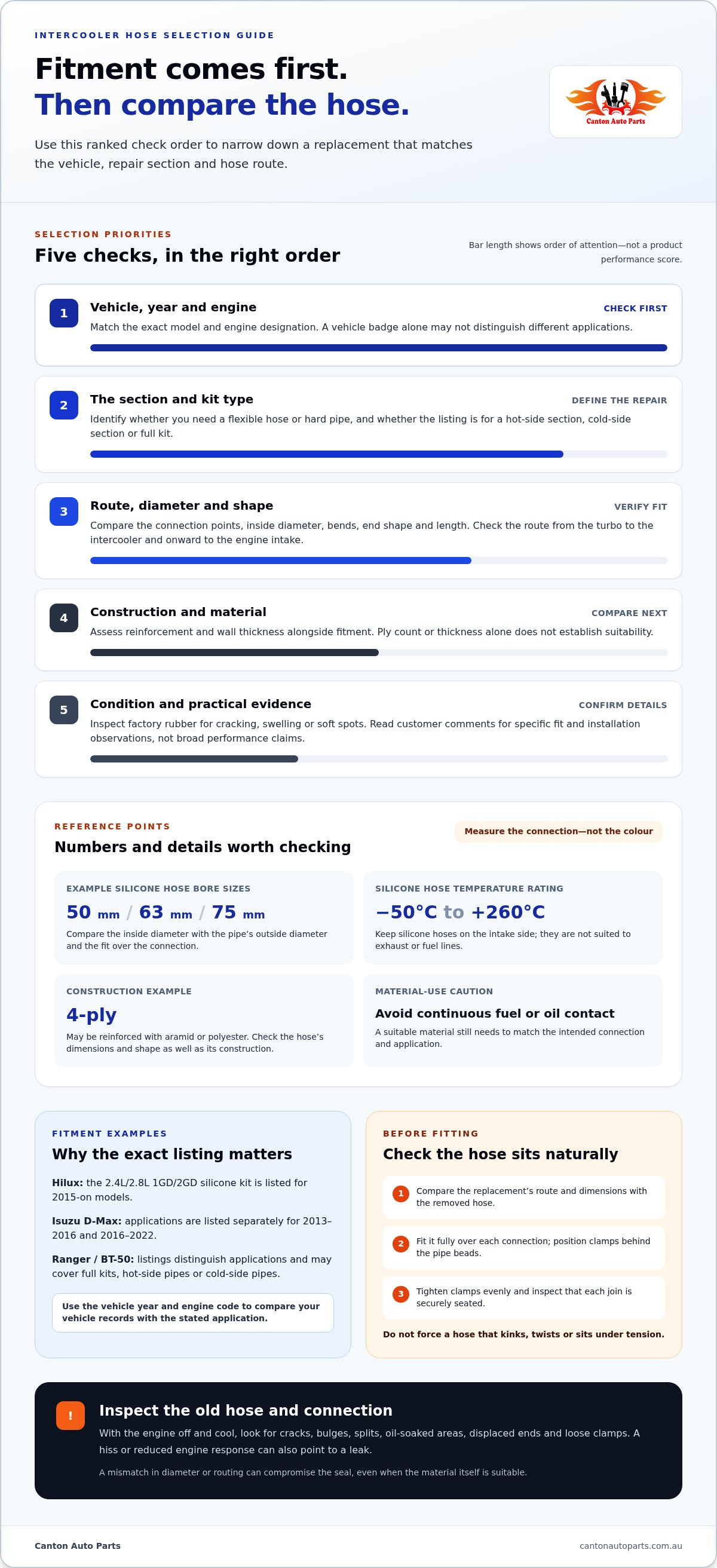
What Is a 4-Ply Silicone Intercooler Hose?
A 4-ply silicone intercooler hose typically contains four layers of reinforcement within its construction.
These layers help the hose maintain its shape and resist expansion under pressure.
When comparing silicone intercooler hoses, consider:
- Internal diameter and overall hose dimensions.
- Reinforcement material and construction.
- Operating temperature and pressure ratings.
- Hose bends, length and connection points.
- Compatibility with the vehicle's turbocharger and intercooler system.
A higher ply count does not automatically guarantee better performance. The hose must be designed for the intended application.
How Long Do Intercooler Hoses Last?
There is no universal replacement interval for intercooler hoses.
Their lifespan depends on operating temperatures, boost pressure, driving conditions and the quality of the hose material.
Factory rubber hoses may gradually develop cracks, swelling or weakened sections after years of use.
Regular inspection is particularly important for older turbocharged vehicles and those operating under demanding conditions.
How to Choose the Correct Replacement Intercooler Hose
Intercooler hoses are often vehicle-specific, even when different products appear similar.
Before ordering a replacement, confirm the following:
- Vehicle make and model: Identify the exact model and series.
- Manufacturing year: Production changes can affect hose designs.
- Engine type: Check the engine capacity and engine code.
- Hose position: Determine whether you need the hot-side or cold-side hose.
- Hose dimensions: Compare the internal diameter, length, bends and connection points.
- Original part number: Use the OEM part number where available to confirm compatibility.
Popular Australian turbocharged vehicles, including the Ford Ranger, Mazda BT-50, Toyota Hilux, Isuzu D-Max and Mitsubishi Pajero Sport, may have different intercooler hose configurations depending on their engine and production year.
Always confirm compatibility before purchasing.
Can You Drive With a Split Intercooler Hose?
Driving with a damaged intercooler hose is not recommended.
A leaking hose can reduce boost pressure, cause poor acceleration and potentially trigger engine warning lights.
A severe boost leak may significantly affect vehicle performance, especially during overtaking or uphill driving.
If you suspect a damaged intercooler hose, arrange an inspection and replacement promptly.
Find the Right Replacement Automotive Parts in Australia
Choosing the correct intercooler hose is essential for maintaining proper turbocharger performance and preventing boost leaks.
At Beyond Auto Parts Australia, we understand the importance of reliable, vehicle-compatible replacement components.
Whether you're maintaining a turbocharged diesel ute or repairing another vehicle system, always confirm the exact vehicle specifications before ordering replacement parts.
Visit Beyond Auto Parts Australia to explore our range of automotive replacement parts, or contact our team for assistance with product compatibility.
Frequently Asked Questions
What happens when an intercooler hose splits?
A split intercooler hose allows compressed air to escape, potentially causing reduced boost pressure, poor acceleration, hissing noises and engine warning lights.
Are silicone intercooler hoses better than rubber?
Reinforced silicone hoses can offer good heat resistance and durability, but performance depends on construction and compatibility. A correctly specified rubber hose can also provide reliable performance.
Can a leaking intercooler hose cause loss of power?
Yes. A boost leak can reduce the amount of compressed air reaching the engine, resulting in reduced acceleration and engine performance.
Do intercooler hoses need regular replacement?
There is no fixed replacement schedule. Intercooler hoses should be inspected periodically and replaced when cracks, splits, swelling or other signs of deterioration are detected.
Tags: