
Brake Pads: Types, Materials and Key Differences
The best brake-pad material isn’t automatically the right choice for your car. Correct fitment comes first: brake pads must match your vehicle’s braking system before material, noise level or dust output matters. Pads press against the rotors to slow the wheels, and their construction can affect braking feel and other everyday trade-offs.
This guide explains how pads work, compares common friction materials and outlines how they can differ in noise, dust and feel. It also covers the vehicle details that matter for fitment, so you can narrow down the correct parts before browsing brand-new aftermarket brake pads and rotors from Canton Auto Parts.
Key Takeaways
- Brake pads create friction against the rotor to slow your vehicle, so their design affects how the braking system performs.
- Compare organic, semi-metallic and ceramic-labelled materials by their typical characteristics and trade-offs, not broad claims that one type is best.
- Noise, visible dust and braking feel can vary between pads and vehicles; treat them as tendencies when weighing your options.
- For correct fitment, identify your vehicle’s make, model, year and variant, then match the part to its braking configuration.
- If brake condition is uncertain, arrange a professional inspection and use the wear indicators below as a guide to signs worth checking.
What brake pads do and why their design matters
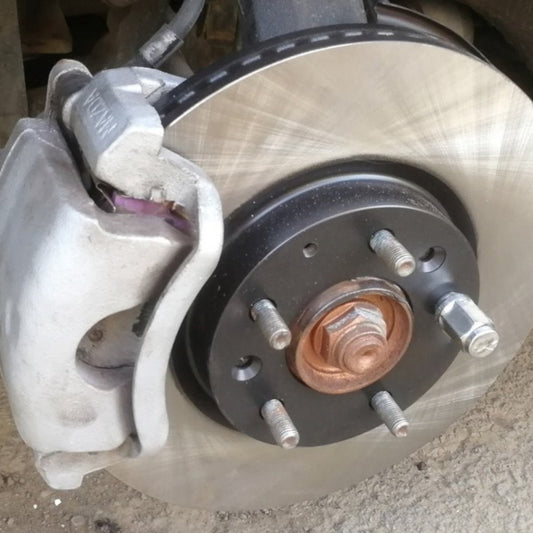
Brake pads are the friction components in a disc-brake assembly. When you press the brake pedal, the calliper applies pressure that brings the pads against a rotor attached to the wheel. This contact slows the rotor and, in turn, the vehicle. The pads, rotor and calliper work together, so choosing a part involves more than comparing its material label.
The friction material is the part of each pad that contacts the rotor. Its formulation and construction are engineered for braking performance, but each design involves trade-offs. A pad that suits one vehicle or driving pattern may not feel or perform the same in another. For background on how friction works and how formulations differ, see this overview of automotive brake pad compositions.
Common brake-pad materials: what changes between types?
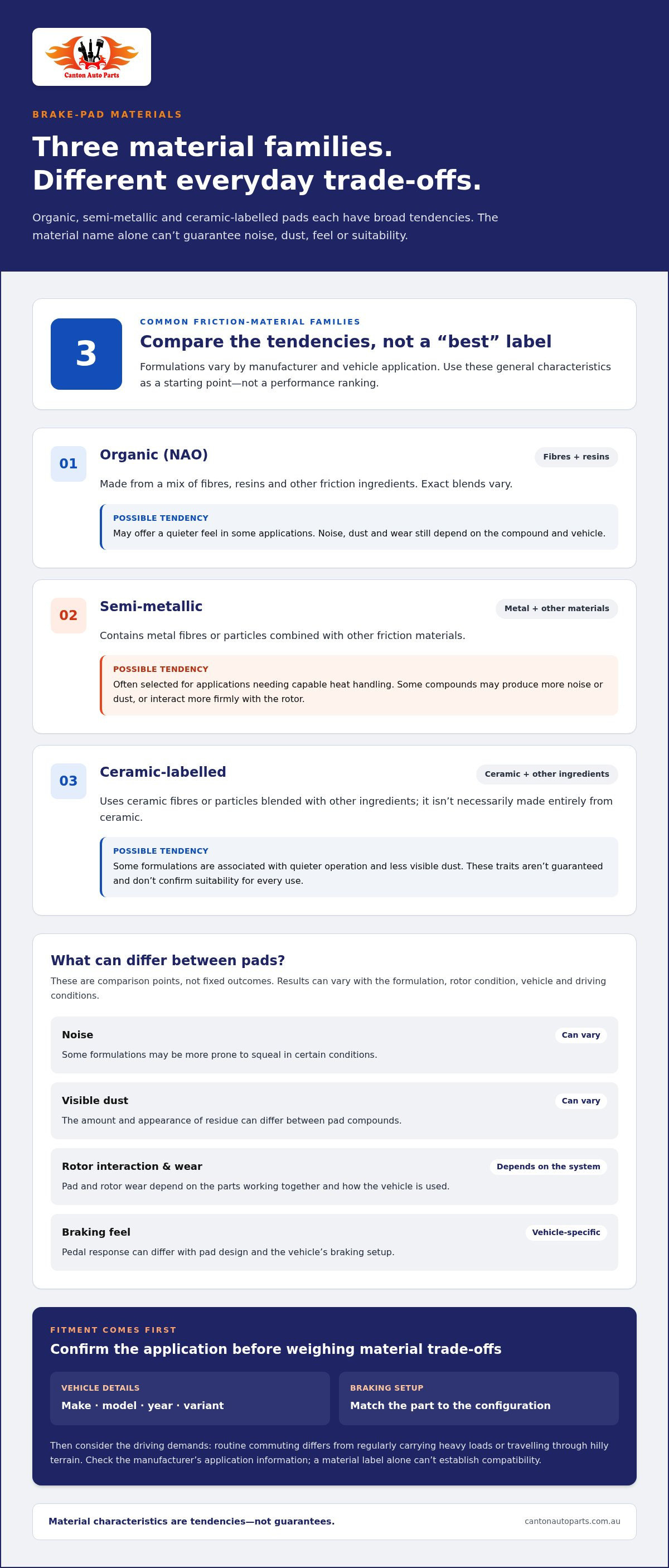
Material labels are a useful starting point, not a complete performance guarantee. Organic, semi-metallic and ceramic-labelled formulations use different blends of friction materials, and their behaviour can vary by manufacturer and vehicle application. Compare the broad characteristics, then use the product’s application information to assess whether it suits your vehicle.
| Material family | General composition | Typical characteristics and trade-offs |
|---|---|---|
| Organic (NAO) | Fibres, resins and other friction ingredients; exact blends vary. | May offer a quieter feel in some applications, but noise, dust and wear depend on the specific compound and vehicle. |
| Semi-metallic | Metal fibres or particles combined with other friction materials. | Often selected for applications needing capable heat handling. Some compounds may produce more noise or dust, or interact more firmly with the rotor. |
| Ceramic-labelled | Ceramic fibres or particles blended with other ingredients. | Some formulations are associated with quieter operation and less visible dust, but these traits aren’t guaranteed and don’t establish suitability for every use. |
Friction materials and their ingredients have also drawn attention for environmental reasons. The U.S. Environmental Protection Agency’s Copper-Free Brake Initiative outlines efforts to reduce copper in brake friction materials to limit waterway pollution. It’s useful background on material development, but it doesn’t replace vehicle-specific fitment information for Australian motorists.
Brake-pad differences compared: noise, dust, feel and use
Material descriptions can help narrow down brake pads, but they don’t predict exactly how a set will behave on your car. Noise, visible dust and pedal response are shaped by the friction compound and by factors such as rotor condition, vehicle setup and driving conditions. Use the comparison below as a guide to tendencies, not a guarantee about every product.
For a more technical reference, SAE brake lining test standards describe test methods for assessing friction materials. Test results and edge codes can offer useful performance information, but they don’t replace vehicle-specific application data or tell you everything about real-world noise and feel.
How to narrow brake-pad options for your vehicle
Start with the vehicle, not the shape of a pad or a broad model name. Cars that look almost identical can have different brake components because of changes in year, variant, engine or braking configuration. Fitment depends on the precise application, so match the part to the vehicle specification before comparing material or price.
- Identify the vehicle. Record its make, model and year. Use the exact details shown in the vehicle documents or manufacturer information.
- Confirm the variant. Note the variant and relevant details such as engine or body style, as these can distinguish applications within the same model range.
- Match the part application. Compare the vehicle details with the brake-pad manufacturer’s application data, including any relevant braking configuration, before selecting a part.
Once you’ve identified the application, compare compatible parts against your vehicle-maker guidance and the product information. Canton Auto Parts supplies brand-new aftermarket brake pads and rotors, with Australia-wide dispatch. Browse aftermarket brake parts with your vehicle details in hand to keep your selection focused on fitment.
Brake-pad replacement: safe next steps and compatible parts
Brake condition is safety-critical. If braking behaviour changes, you hear a concerning noise or see damage, don’t assume the cause from one symptom. Arrange an inspection by a qualified mechanic if you’re unsure about the condition, and avoid continuing to drive if the vehicle doesn’t feel safe to control.
Tags: