
Alternator: What It Does, When It Fails and What to Do Next
What if the battery isn’t the part causing your starting trouble? A flat battery is an obvious suspect, but a failing alternator can leave it drained. The alternator generates power while the engine runs, operating electrical systems and replenishing the battery.
Key Takeaways
- Learn how the alternator supplies power while the engine runs and supports the battery.
- See how the battery, alternator and starter motor each play a different part in starting and powering your car.
- Recognise warning lights, dimming electrical equipment and recurring battery trouble as signs that the charging system may need investigation.
- Gather your vehicle’s make, model, year and engine details before searching for a replacement.
- Use your vehicle identification details to help narrow down a compatible alternator.
What does a car alternator do, and why does it matter?
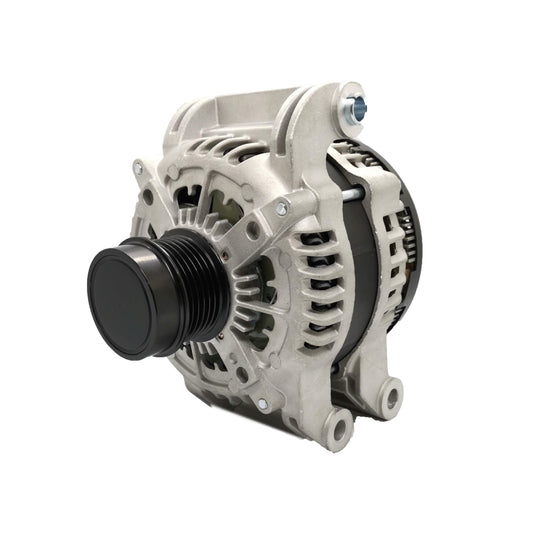
A car alternator is an engine-driven electrical generator. While the engine is running, it supplies electrical power to the vehicle’s systems and helps restore charge to the battery. The battery stores electrical energy; the alternator produces it. Both components are needed to support starting and everyday electrical use, but they do different jobs.
How does the alternator relate to the charging system?
The alternator, battery and voltage regulation work as connected parts. The engine drives the alternator, which generates electrical power. Voltage regulation helps control the supply, while the battery stores energy and supports starting and electrical loads. Together, these parts help keep the vehicle’s electrical systems supplied while the engine runs.
A charging concern doesn’t automatically point to the alternator. Our guide How a car alternator works explains how engine movement becomes electrical power.
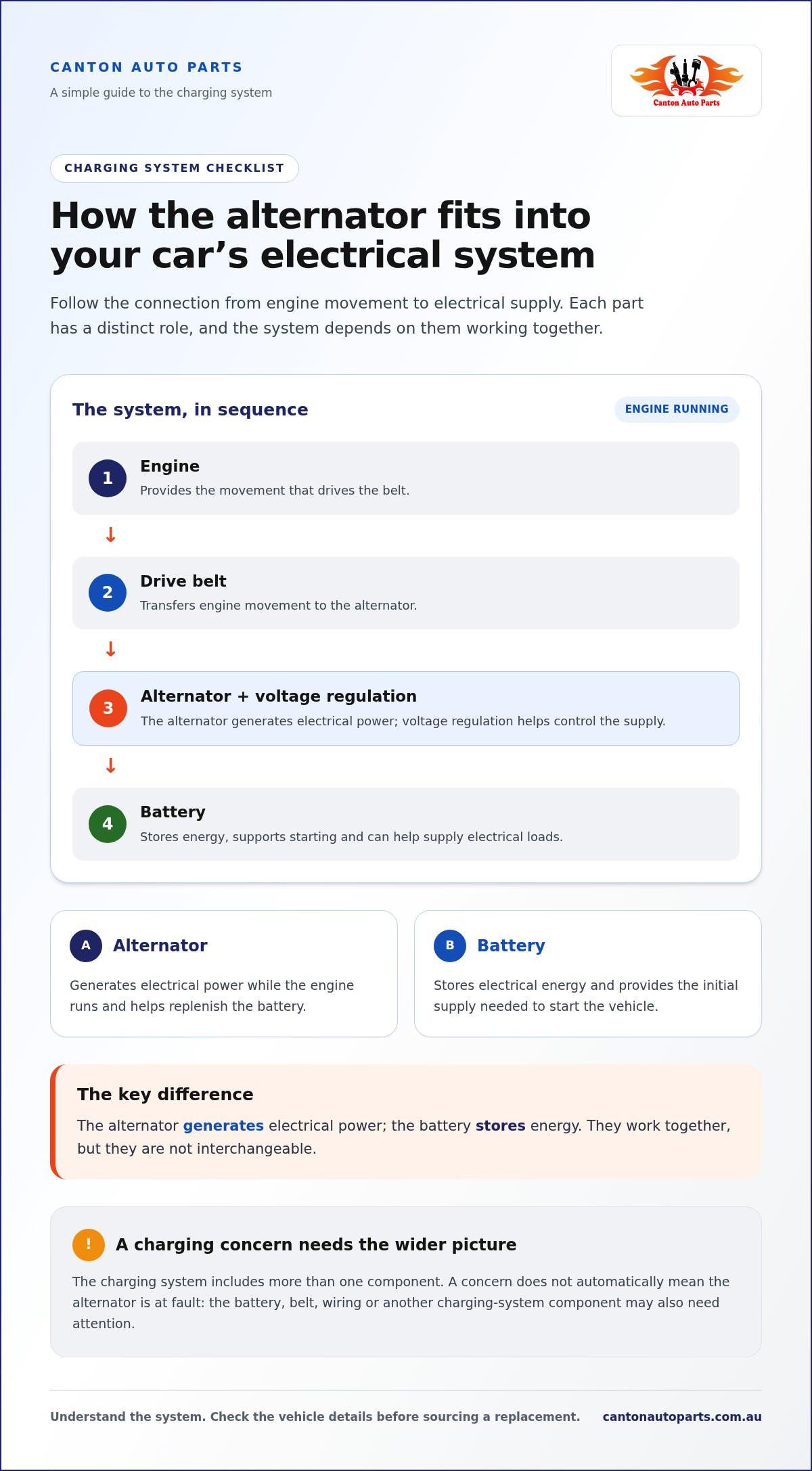
How the alternator fits into your car’s electrical system
Your car’s charging system links engine movement to the vehicle’s electrical supply. A drive belt transfers movement from the engine to the alternator, which generates electrical power. Voltage regulation helps control that supply, while the battery stores energy for starting and other electrical loads. Each part has a distinct role, and the system depends on them working together.
- Engine: provides the movement that drives the belt.
- Drive belt: transfers that movement to the alternator.
- Alternator and voltage regulation: generate and control electrical supply while the engine runs.
- Battery: stores energy and supplies it when needed, including during starting.
Alternator, battery or starter motor: what is the difference?
These three components work together, but they don’t do the same job. The battery stores energy, the alternator generates electrical power while the engine runs, and the starter motor turns the engine during start-up. Knowing the difference can help you describe a problem more clearly, but a symptom alone can’t identify which part needs attention.
| Component | Main purpose | When it operates |
|---|---|---|
| Battery | Stores electrical energy and supplies power for starting and other loads. | Before and during start-up, and when stored energy is needed. |
| Alternator | Generates electrical power and helps replenish the battery. | While the engine is running. |
| Starter motor | Uses electrical power to turn the engine so it can start. | Briefly during start-up. |
When should an alternator be checked or replaced?
Warning lights, dimming electrical equipment and repeated battery trouble can all suggest a charging-system concern. Treat them as prompts to investigate, not proof that the alternator has failed. Similar symptoms can come from the battery, drive belt, wiring or another part of the system, so replacing a component based on one sign can lead to the wrong purchase.
Canton Auto Parts is an Australian-owned online retailer supplying brand-new aftermarket replacement parts, with Australia-wide dispatch. Once you’re ready to source the part, browse Canton Auto Parts’ alternator range with your vehicle details at hand.
Before you buy an alternator, prepare your vehicle details
- Record the make, model and year. Include the full model name and any badge or variant information shown on the vehicle documents.
- Note the engine details. Record the engine size and code if available. Different engine versions can use different mounting arrangements or electrical specifications, even within the same model year.
- Find the vehicle identification number (VIN). This can help identify the exact vehicle configuration when model details alone aren’t enough.
- Check existing references. If the original part number is visible in your records or documentation, keep it handy. Don’t rely on appearance alone to identify a match.
Have your vehicle information ready, then browse alternators at Canton Auto Parts.
Frequently Asked Questions
Can a car run if its alternator stops charging?
Usually, a car can keep running briefly on energy stored in the battery, but not indefinitely. As the charge falls, electrical systems may stop working and the engine may stall. How long it runs depends on the vehicle, battery condition and electrical load.
Will jump-starting a car fix an alternator problem?
No. A jump-start can provide enough temporary power to start a car with a flat battery, but it doesn’t repair a charging fault. If the alternator isn’t replenishing the battery, the car may lose power again once the temporary boost is gone. A jump-start is a way to get the engine going, not a test or fix for the cause of the battery trouble.
Tags:
Previous
Braking System: Reduce Brake Wear and Understand Safety Features
Next
Brake Pads: Types, Materials and Key Differences