
Braking System: Reduce Brake Wear and Understand Safety Features
Modern braking safety involves stopping power and control. A braking system combines components that slow the vehicle with features such as ABS, which helps prevent wheel lock. Most modern cars use tandem master cylinders, so braking may remain available if one hydraulic circuit fails.
Driving habits and maintenance affect brake wear. This guide covers ways to reduce unnecessary wear and explains how ABS, EBS and tandem master cylinders support braking safety.
Key Takeaways
- Smoother driving and regular brake-fluid maintenance can limit avoidable wear.
- ABS and other electronic features support control in demanding situations.
- Tandem master cylinders can preserve braking if one hydraulic circuit fails, but brake problems still need attention.
- The pedal, hydraulic circuits, pads, rotors and other parts work together to slow the vehicle.
- Recognise warning signs early and replace braking parts when needed.
Driving and maintenance practices to reduce brake wear
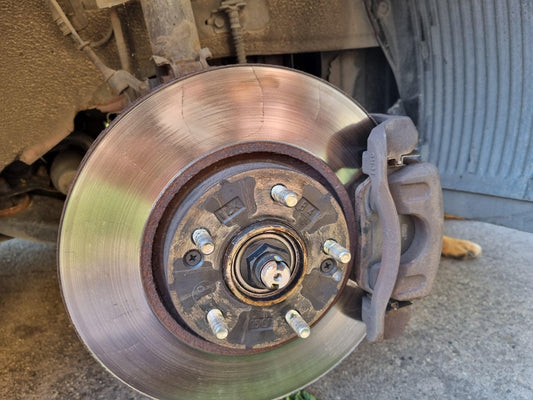
Ease off early and brake progressively to reduce friction and heat. Disc brakes use pads against a rotor; drum brakes press shoes against a drum. Disc brakes are generally more efficient, while repeated braking can heat drums and cause fade.
Brake fluid transfers hydraulic pressure and lubricates internal components. Change it every 2-3 years, or as the manufacturer recommends. DOT 3 and DOT 4 absorb water and have a lower boiling point over time. DOT 5 is silicone-based; DOT 5.1 is a separate type. Don’t mix types, and keep DOT 3 and DOT 4 containers sealed.
A vacuum servo reduces pedal effort. If it loses vacuum, the mechanical link still works but requires much greater force. Warning signs include grinding, pulling, vibration, a soft pedal or changed pedal effort. If braking feels unsafe, stop driving and arrange an inspection.
Australian requirements vary by vehicle. The Australian manual requires heavy vehicles over 4.5 tonnes gross vehicle mass to stop within 16.5 metres in its service-brake test. Trailers over 750 kg GTM need effective brakes; those over 2,000 kg GTM need brakes on all wheels and a break-away system.
Advanced braking systems and ABS/EBS
Electronic braking features can coordinate braking beyond pedal input. EBS uses electronic signals across connected heavy-vehicle components, including the prime mover and trailer. Pneumatic systems still operate the brakes, so electronic controls and mechanical components must work together.
In Australia, a trailer over 2,000 kg GTM must have brakes that activate automatically if it detaches from the tow vehicle. This break-away function addresses detachment, not routine electronic coordination. Choose braking parts suited to your vehicle when replacing components.
Master cylinder failure protection
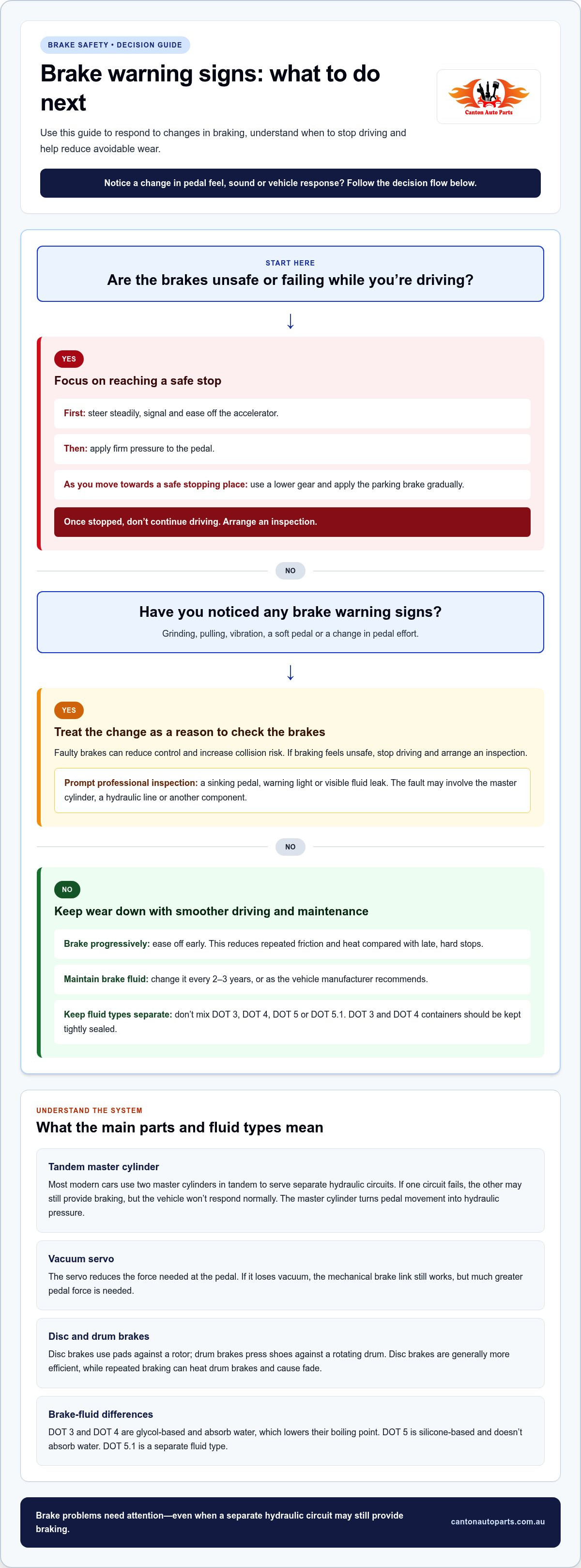
Most modern cars use tandem master cylinders for separate hydraulic circuits. If one fails, the other may still provide braking, although the vehicle will not respond normally. The master cylinder converts pedal movement into hydraulic pressure, which can be weakened by a leak or seal fault.
If the brakes fail while driving, steer steadily, signal and ease off the accelerator. Apply firm pedal pressure, then use a lower gear and gradually apply the parking brake while moving towards a safe stopping place. Don’t continue driving after stopping.
Anti-lock braking systems
Anti-lock braking systems, or ABS, help prevent wheel lock during hard braking. Wheel sensors monitor rotation and an electronic control unit responds when a wheel slows sharply. Hydraulic valves adjust pressure rapidly, helping preserve steering control.
When ABS activates, keep firm, continuous pressure on the pedal. Pulsing or vibration is normal as pressure changes; don’t pump the pedal. If the ABS warning light stays on, the anti-lock function may be unavailable even if conventional braking still works.
What are the main components of a vehicle braking system and how do they work?
Most modern cars have hydraulic brakes on all four wheels. Pressing the pedal moves the master-cylinder piston, sending fluid through lines to the wheel brakes. A pedal lever with a four-to-one ratio multiplies force by four; a cylinder three times the pedal cylinder’s diameter multiplies force by nine.
Brake fluid carries pressure through pipes and flexible hoses. At each wheel, a caliper presses pads against a rotating disc, creating friction. A leak, damaged hose or seized caliper can affect pressure delivery or pad movement and reduce braking at that wheel.
When replacing components, match them to the vehicle’s brake layout and specifications. Pads, rotors, calipers, shoes, drums, hoses and hydraulic components must work together, with electronic parts also required for ABS-equipped vehicles.
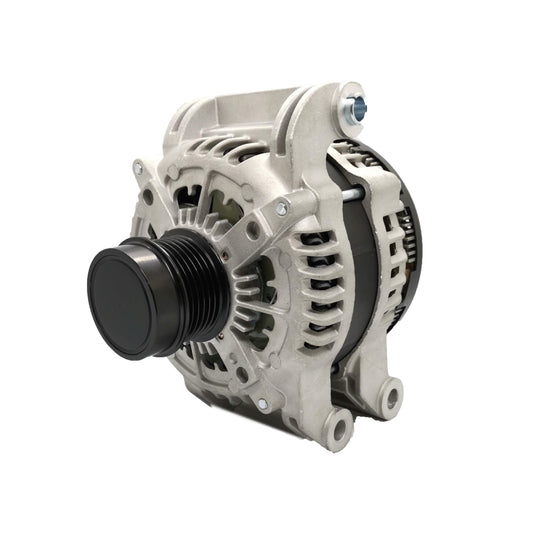
Canton Auto Parts: Alternator
Canton Auto Parts supplies new braking system parts, including brake pads and rotors, as well as alternators. Match replacements to your vehicle’s make, model and braking configuration. Check the vehicle manual, then visit cantonautoparts.com.au or contact Canton Auto Parts for help.
Frequently Asked Questions
What are ABS, EBD and brake assist, and how do they improve braking?
ABS helps prevent wheel lock, EBD adjusts braking force between wheels, and brake assist can increase pressure during an emergency stop. EBD can account for vehicle load, while ABS helps maintain steering control. These features support the driver but cannot overcome limited tyre grip or replace sound brakes. Keep speed and following distance suited to the road.
How often should brake pads, rotors and brake fluid be inspected or replaced in Australia?
Follow the manufacturer’s servicing schedule, as wear depends on the vehicle, driving conditions and component condition. Change brake fluid every 2-3 years, or as recommended. Assess pads and rotors for wear or damage rather than using a universal interval, and ask for measured condition during an inspection.
How much does it cost to replace brake pads, rotors or brake fluid in Australia?
Repair costs vary between Australian vehicles. The total depends on the make and model, components, parts selected and labour. Pads alone cost differently from pads and rotors together, while brake-fluid work depends on the vehicle. Request an itemised quote separating parts and labour.
How can drivers safely check and maintain their braking system?
Park on level ground, consult the owner’s manual and check dashboard warnings before driving. Look for visible fluid leaks around the wheels or beneath the vehicle, without crawling underneath. Note pulling, vibration or unusual pedal movement. Don’t dismantle components or rely on a visual check to diagnose faults; arrange a professional inspection if you notice a warning or change.
Tags:
Previous
Car Alternator: What It Does, How It Works and When to Replace It
Next
Alternator: What It Does, When It Fails and What to Do Next