
Low-dust carbon-fibre ceramic pads and wheel care for black alloy wheels
Black alloy wheels look great, but brake dust can quickly make them appear dirty. Even vehicles fitted with ceramic brake pads can develop visible brake dust over time.
The good news is that choosing low-dust ceramic brake pads and following a regular wheel-cleaning routine can significantly reduce visible buildup and make maintenance easier.
In this guide, we'll explain what causes brake dust, how ceramic brake pads compare with other compounds, and how to keep black alloy wheels clean and protected.
Key Takeaways
- Ceramic brake pads generally produce less visible dust than metallic and semi-metallic pads.
- Low-dust brake pads help keep black alloy wheels cleaner for longer.
- Brake dust can damage wheel finishes if left untreated.
- Clean alloy wheels every one to two weeks, depending on driving conditions.
- Wheel sealants and ceramic coatings make cleaning easier but do not eliminate brake dust.
- Always choose brake pads compatible with your vehicle.
1. Why Do Black Alloy Wheels Collect Brake Dust?
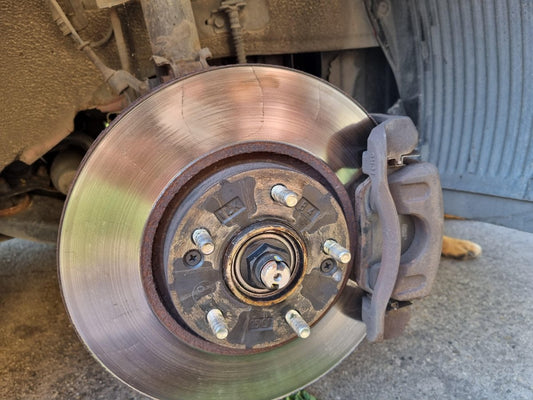
Brake dust is produced through normal friction between brake pads and brake discs. As the braking components wear, tiny particles are released and settle on the wheels.
Black alloy wheels make brake dust particularly noticeable because light grey and brown residue contrasts with the dark finish.
Several factors influence brake dust buildup:
- Brake pad compound: Different materials produce different amounts of visible dust.
- Driving conditions: Stop-start traffic and frequent braking increase brake component wear.
- Driving habits: Heavy braking can contribute to faster pad wear.
- Road conditions: Moisture and road contaminants can cause residue to stick to wheel surfaces.
Regular cleaning is important because accumulated brake dust can contribute to staining and deterioration of the wheel's protective finish.
2. Do Ceramic Brake Pads Produce Less Brake Dust?
Yes. Ceramic brake pads generally produce less visible brake dust than conventional metallic and semi-metallic brake pads.
This makes them a popular option for drivers who want to maintain cleaner alloy wheels, particularly black and dark-coloured wheels.
Some key benefits include:
- Lower visible dust: Helps reduce the amount of residue accumulating on alloy wheels.
- Cleaner appearance: Dark alloy wheels can maintain their appearance for longer between washes.
- Easier maintenance: Less visible buildup can make routine wheel cleaning easier.
- Everyday driving suitability: Compatible ceramic pads can be suitable for many passenger vehicles.
However, ceramic brake pads are not completely dust-free. Their suitability depends on the vehicle's braking system, manufacturer specifications and driving conditions.
Always confirm brake pad compatibility before changing compounds.
3. Ceramic vs Metallic vs Semi-Metallic Brake Pads
Different brake pad compounds have different characteristics.
| Brake pad type | General characteristics |
|---|---|
| Ceramic | Generally produces less visible brake dust |
| Semi-metallic | Contains metallic materials and can produce more visible dust |
| Metallic | Designed with metallic friction materials; dust output varies by formulation |
If keeping black alloy wheels clean is your priority, ceramic brake pads are worth considering.
However, brake dust should not be the only factor when selecting replacement pads. Vehicle compatibility, braking requirements and intended driving conditions should always come first.
4. How to Clean Brake Dust from Black Alloy Wheels
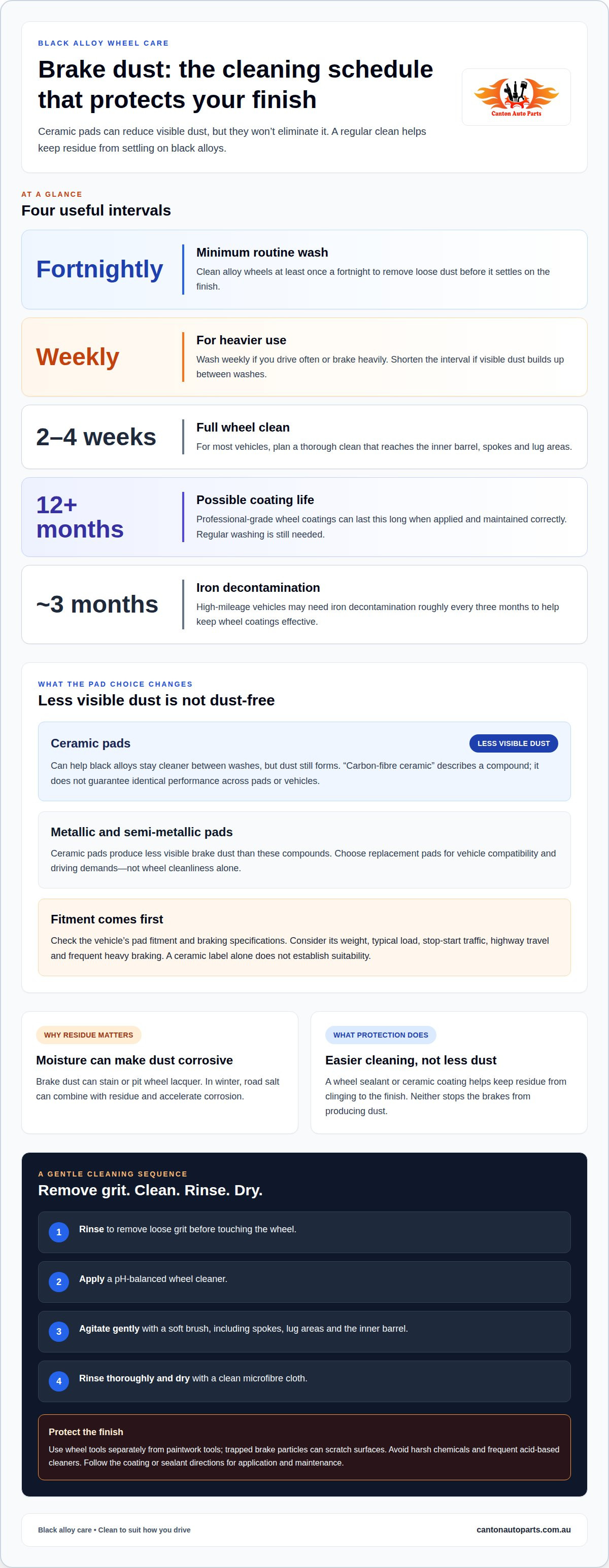
Regular cleaning prevents brake dust and road contaminants from accumulating on your wheels.
Follow these simple steps:
- Rinse the wheels: Remove loose dirt and grit with clean water.
- Apply wheel cleaner: Use a suitable pH-balanced alloy wheel cleaner.
- Clean gently: Use a soft wheel brush or dedicated microfibre cleaning mitt.
- Rinse thoroughly: Remove all remaining cleaning product and residue.
- Dry the wheels: Use a clean microfibre towel to prevent water spots.
Avoid harsh chemicals, abrasive brushes and unsuitable acid-based cleaners, as these may damage the wheel's protective coating.
Clean your wheels at least once every two weeks. If you regularly drive in heavy traffic or brake frequently, weekly cleaning may be more appropriate.
5. Can Ceramic Wheel Coatings Prevent Brake Dust?
Ceramic wheel coatings and wheel sealants can help reduce brake dust adhesion.
They create a protective layer over the wheel surface, making it easier to remove dirt, brake dust and other contaminants during washing.
However, wheel coatings do not prevent brake dust from forming.
For better results:
- Clean the wheels thoroughly before applying protection.
- Use a suitable wheel-specific ceramic coating or sealant.
- Follow the manufacturer's application instructions.
- Maintain a regular cleaning schedule.
Combining suitable wheel protection with low-dust ceramic brake pads can make black alloy wheels easier to maintain.
6. How to Choose the Right Ceramic Brake Pads for Your Vehicle
When purchasing replacement brake pads, choosing the correct fitment is more important than simply selecting a low-dust compound.
Before ordering, check:
- Vehicle make and model.
- Manufacturing year and model series.
- Engine size and variant.
- Front or rear brake pad application.
- Existing brake pad and disc specifications.
Some vehicles use different braking systems depending on their production year, engine configuration or model variant.
If you are unsure about compatibility, check your vehicle's VIN or registration details before purchasing.
Find Quality Replacement Brake Parts at Beyond Auto Parts Australia
At Beyond Auto Parts Australia, we supply a range of replacement automotive components, including brake pads, brake discs, brake shoes, alternators, starter motors and suspension parts.
Whether you're replacing worn brake pads or looking for a suitable ceramic brake pad option, selecting the correct application is essential for reliable braking performance.
Explore our range of replacement brake pads and braking system parts and find suitable components for your vehicle.
Beyond Auto Parts Australia – Quality Automotive Parts at Competitive Prices.
Frequently Asked Questions
1. Do ceramic brake pads produce less dust?
Yes. Ceramic brake pads generally produce less visible brake dust than metallic and semi-metallic alternatives. However, they are not completely dust-free.
2. Are ceramic brake pads better for black alloy wheels?
Ceramic pads are worth considering because their lower visible dust output can help keep black alloy wheels cleaner for longer.
3. How often should I clean black alloy wheels?
Clean your wheels every one to two weeks. Weekly cleaning is recommended if you drive frequently or regularly encounter heavy traffic.
4. Can brake dust damage alloy wheels?
Yes. Brake dust and road contaminants can contribute to staining and deterioration of the wheel's protective finish if left untreated.
5. Does ceramic coating stop brake dust?
No. Ceramic coatings help prevent contaminants from sticking firmly to wheel surfaces, making cleaning easier, but they cannot stop brake dust from forming.
6. Are ceramic brake pads suitable for all vehicles?
No. Brake pads must match the vehicle's braking system and specifications. Always confirm the correct fitment before purchasing replacement pads.
Tags:
Previous
Alternator Symptoms: How to Tell Them from Battery Trouble
Next
How to choose the right alternator for your vehicle’s electrical load