
Metallic Grinding Noise While Braking Without a Warning Light
Not every grinding noise has the same cause. Worn brake pads, loose components, a sticking caliper or debris trapped between the pad and rotor can all produce unusual sounds.
In this guide, we explain the common causes of grinding brakes, whether it is safe to keep driving, and when brake pads or rotors need replacing.
1. Why Are My Brakes Making a Grinding Noise?
A grinding noise when braking usually indicates unwanted contact between components or a problem within the brake assembly.
Common causes include:
Worn brake pads: When the friction material wears away, the metal backing plate can contact the brake rotor, creating a harsh grinding sound. This metal-to-metal contact can quickly damage the rotor.
Loose or damaged brake components: Loose calipers, missing anti-rattle clips or damaged fitting hardware can cause grinding, clicking or knocking noises during braking.
Sticking brake caliper: A seized or sticking caliper may keep the brake pad pressed against the rotor, causing excessive friction, overheating and uneven wear.
Debris trapped between pads and rotors: Small stones, dirt or metal particles can become trapped in the brake assembly and produce a scraping or grinding noise.
Brake wear sensors: Some vehicles use mechanical wear indicators that create noise when the pads become too thin. These systems may produce a warning sound without activating a dashboard light.
2. Is It Safe to Drive With Grinding Brakes?
Driving with grinding brakes can be dangerous. If the brake pads have worn down to their metal backing plates, continued driving can damage the rotors and reduce braking efficiency.
Potential risks include:
- Further damage to brake discs and pads.
- Excessive heat from continuous friction.
- Uneven braking caused by sticking calipers.
- Increased repair costs.
- Reduced braking performance and longer stopping distances.
A clear dashboard does not guarantee that your brakes are in good condition.
If you notice metallic grinding, minimise driving and arrange a professional inspection as soon as possible. If the brake pedal feels spongy, braking performance drops or the vehicle pulls to one side, stop somewhere safe and arrange assistance.
3. Do Grinding Brakes Mean You Need New Rotors?
Not necessarily. Grinding noises do not automatically mean the brake rotors need replacing.
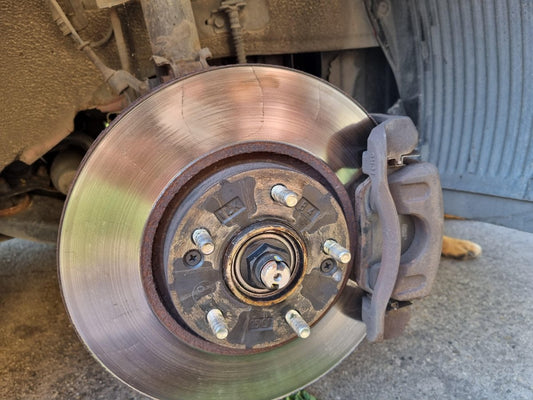
However, when worn pads allow metal-to-metal contact, the rotor surface can develop deep grooves and scoring.
A mechanic should inspect:
- Brake pad thickness and condition.
- Rotor surface for deep scratches or uneven wear.
- Rotor thickness against manufacturer specifications.
- Caliper movement and operation.
- Brake fitting hardware and possible debris.
If the rotor remains within specifications and has no significant damage, resurfacing may be possible. Deep scoring, cracks or insufficient thickness may require replacement.
4. Can Brake Rotors Be Resurfaced or Must They Be Replaced?
Brake rotor resurfacing involves machining the disc to restore a suitable braking surface.
Resurfacing may be appropriate when the damage is minor and sufficient rotor thickness remains after machining.
Replacement is generally necessary when:
- Rotor thickness is below the manufacturer's minimum.
- Deep grooves or scoring cannot be safely corrected.
- The rotor has cracks or significant heat damage.
- Excessive runout affects braking performance.
- Machining would leave the rotor outside manufacturer specifications.
Always assess brake pads and calipers alongside the rotors. Replacing worn pads without addressing a sticking caliper, for example, may lead to further uneven wear.
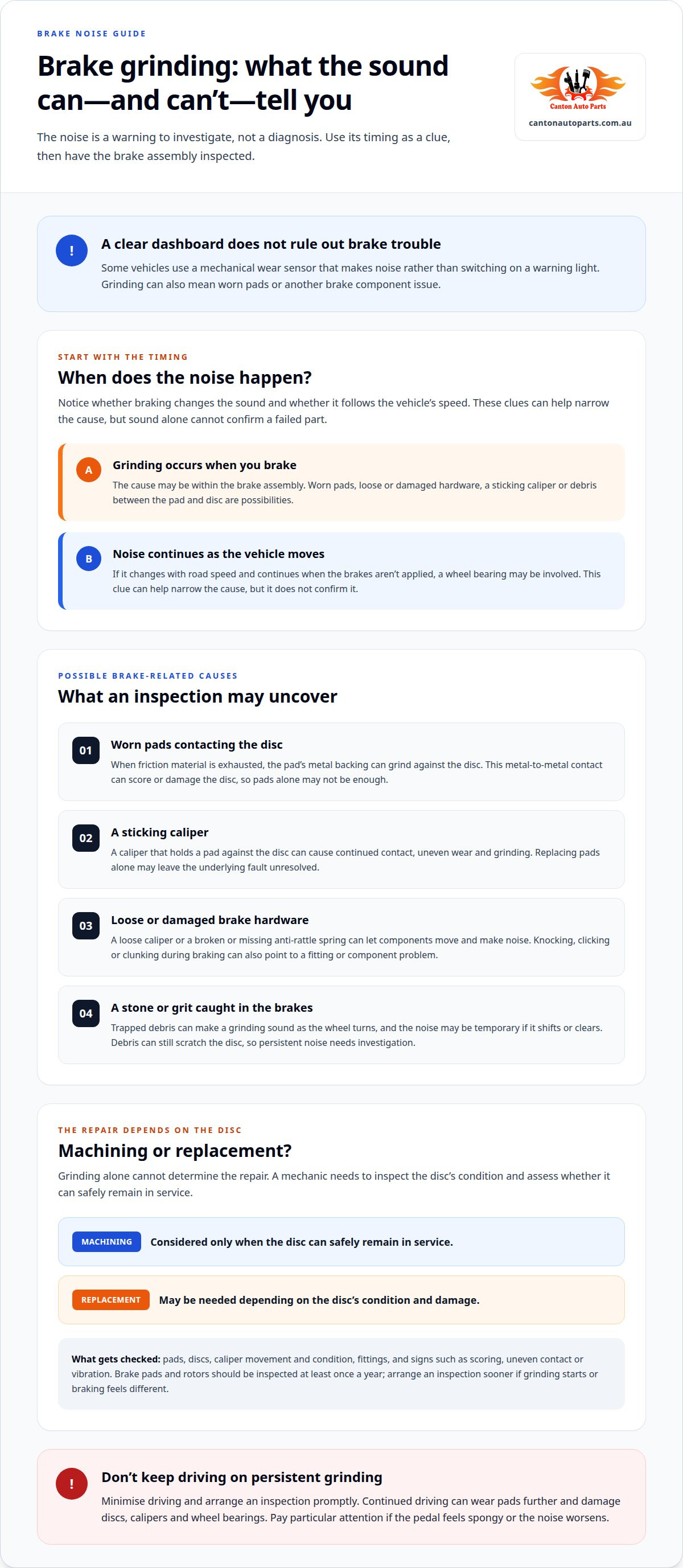
5. How Can You Tell Whether Grinding Comes From Brake Pads, Rotors or Wheel Bearings?
The timing of the noise can provide useful clues.
- Worn brake pads: Grinding usually becomes noticeable when applying the brakes.
- Damaged rotors: Scoring, vibration or uneven braking may accompany the noise.
- Trapped stones: A sudden scraping noise may occur as the wheel rotates and sometimes disappear when debris moves.
- Loose brake hardware: Clicking, knocking or intermittent grinding may occur during braking.
- Wheel bearing problems: A humming or grinding noise may change with vehicle speed and continue even when the brakes are not applied.
These symptoms are not definitive diagnoses. A professional inspection is needed to identify the faulty component.
6. When Should You Replace Brake Pads and Rotors?
Replace brake pads when their friction material reaches the manufacturer's service limit or becomes damaged.
Brake rotors should be replaced when they fall below minimum thickness or have damage that makes them unsuitable for further use.
When installing replacement rotors, inspect the brake pads and fitting hardware at the same time. Using compatible new pads with replacement rotors helps establish proper contact and consistent braking performance.
7. Find Quality Replacement Brake Parts at Canton Auto Parts
If an inspection confirms that your brake pads or rotors need replacing, choosing the correct components is essential for safe and reliable braking.
Canton Auto Parts offers a range of brand-new brake pads, brake rotors and other automotive replacement parts for various vehicle applications.
Before ordering, check your vehicle's make, model, year and brake specifications to ensure correct fitment.
Visit Canton Auto Parts Australia to explore our range of replacement braking components.
Frequently Asked Questions
Why are my brakes grinding but there is no warning light?
Some vehicles use mechanical brake wear indicators rather than electronic dashboard sensors. Worn pads can therefore produce grinding noises without activating a warning light.
Can completely worn brake pads damage rotors?
Yes. When the friction material wears away, the metal backing plate can grind against the rotor, causing deep scoring and potentially requiring rotor replacement.
How long can I drive with grinding brakes?
There is no safe universal driving distance. Continued driving can worsen brake damage. Minimise driving and arrange an inspection promptly.
Can a stone cause grinding noises when braking?
Yes. Small stones or debris trapped between the brake pad and rotor can produce scraping or grinding sounds. Persistent noise still requires inspection.
Should I replace brake pads and rotors together?
Not always. Existing rotors can sometimes be reused if they meet manufacturer specifications and have no significant damage. A mechanic should assess both components before deciding.
Is grinding worse than squeaking brakes?
Grinding is generally more concerning because it can indicate metal-to-metal contact or another mechanical fault. Have persistent grinding inspected promptly.
Tags: